

A detailed planning and investment guide for developers, hospitality entrepreneurs, and family entertainment investors designing boutique soft play venues that blend aesthetic excellence, developmental rigour, and sustainable commercial performance.
Introduction: The Engineering Mindset Behind Premium Play
The word engineering might seem an unusual choice to describe the design of a children’s play space. It suggests precision, systems thinking, and technical rigour. But those are precisely the qualities that distinguish a truly exceptional boutique soft play arena from the many venues that look beautiful on opening day and struggle to sustain that standard under the pressures of high daily footfall, exacting hygiene requirements, and the physical demands that hundreds of energetic children place on every surface, structure, and system within the space.
Luxury indoor play arenas are, at their most fundamental level, engineered environments. Every material selection is a performance specification. Every spatial decision is a flow optimisation. Every technology integration is a long-term maintenance commitment. And every design choice that delights a visiting parent or captivates a playing child is the product of deliberate, expert decision-making across multiple interlocking disciplines: interior design, developmental psychology, structural safety, hospitality operations, and commercial financial modelling.
This guide approaches the design of high-end boutique soft play arenas through that engineering lens. It covers the full spectrum of considerations that a developer must navigate to create a venue that delivers genuinely premium experiences, maintains those standards consistently over years of operation, and generates the financial returns that justify the investment. From experience zoning strategy and technology integration to operational excellence and the monetisation frameworks that drive long-term profitability, every dimension of the boutique play space is examined with the precision that the format demands.
DESIGN PRINCIPLE | A boutique soft play arena is not simply a conventional play venue with better furniture. It is an engineered hospitality environment where aesthetic quality, developmental design philosophy, hygienic specification, and commercial architecture are integrated from the first line of the brief rather than layered onto each other after the fact. |
Experience Zoning Strategy: Designing the Play Environment
The experience zoning strategy of a boutique soft play arena is the spatial and developmental framework within which every other design decision operates. Zoning determines which experiences the venue offers, which age groups it serves and how it serves them distinctly, how visitors move through the space, and where the commercial opportunities within the visitor journey are located. Getting the zoning strategy right from the outset is the foundational design decision that shapes the entire project.
The Zone Framework
A well-engineered boutique play arena organises its floor plate around a coherent set of distinct experience zones, each serving a specific developmental purpose and a defined age group, while contributing to a spatial composition that is visually unified and operationally coherent. The following table provides an overview of the core zone types, their primary experience characteristics, and the age groups they are designed to serve.
Zone | Primary Experience | Age Group |
Toddler Sensory Pod | Tactile exploration, soft light stimulation, gentle sound environments | 6 months to 3 years |
Climbing and Adventure Module | Structured climbing, tunnels, balance beams, and physical challenge | 3 to 8 years |
Foam Pit Arena | Gross motor play, jumping, tumbling, and proprioceptive stimulation | 4 to 10 years |
Interactive Projection Floor | Digital game play, reactive visual environments, collaborative challenges | 3 to 12 years |
Creative and Craft Studio | Art activities, workshop programming, sensory messy play in a contained area | 2 to 10 years |
Parent Cafe Lounge | Hospitality-grade coffee, food menu, direct sightlines to all play zones | Adults |
Toddler Sensory Pods
The toddler sensory pod is the zone that most clearly communicates the developmental seriousness of a premium boutique play venue and most powerfully differentiates it from the conventional soft play model. A well-designed sensory pod is not simply a padded enclosure with primary-coloured equipment scaled down for small bodies. It is a carefully calibrated multi-sensory environment that supports the specific developmental needs of children between six months and three years: tactile exploration through varied surface textures, visual stimulation through controlled colour and light environments, auditory discovery through embedded sound elements, and the proprioceptive input that supports early body awareness and coordination development.
The materials specification for a toddler sensory pod demands particular attention to hygiene, since infants place surfaces in their mouths and are more vulnerable than older children to bacterial exposure. All surfaces must be seamlessly constructed with antimicrobial materials, easily wipeable with medical-grade cleaning agents, and free from any crevices or joints where bacteria can accumulate. The physical scale and soft furniture of the zone must also be designed for the supervision comfort of accompanying parents and carers, since toddler play requires close adult proximity and the quality of the adult’s physical comfort within the zone directly affects their overall experience of the venue.
Climbing Modules
Climbing and adventure modules represent the physical challenge heart of the boutique play arena and are typically the zone that generates the most visual impact and the most immediate excitement response from children on arrival. A premium climbing module is distinguished from its conventional counterpart by the quality and coherence of its design language, the specification of its materials and structural connections, the sophistication of its challenge variety, and the integration of narrative or thematic elements that give children imaginative context for their physical activity. Structural steel framing fully padded with high-density antimicrobial foam, non-slip textured climbing surfaces, concealed cable routing for any integrated lighting or interactive elements, and clear sightlines from the parent lounge to all climbing levels are the baseline specifications for a premium installation.
Foam Pits
The foam pit is one of the most enduringly popular elements in any soft play environment and, when engineered correctly, one of the safest and most physically developmental. A premium foam pit specification addresses the density and sizing of foam blocks to ensure safe energy absorption across the full range of child body weights and jump intensities that will be encountered in daily operation. Block replacement schedules must be factored into the operational budget from day one, as foam blocks in a high-footfall pit degrade over time and must be refreshed to maintain their safety specification. Hygiene management of the foam pit, including UV sanitisation systems and regular block cleaning or replacement cycles, is a critical operational requirement and should be actively communicated to parents as a brand quality signal.
Interactive Projection Floors
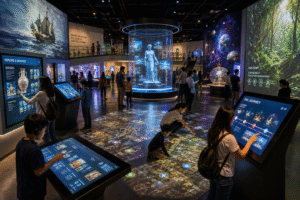
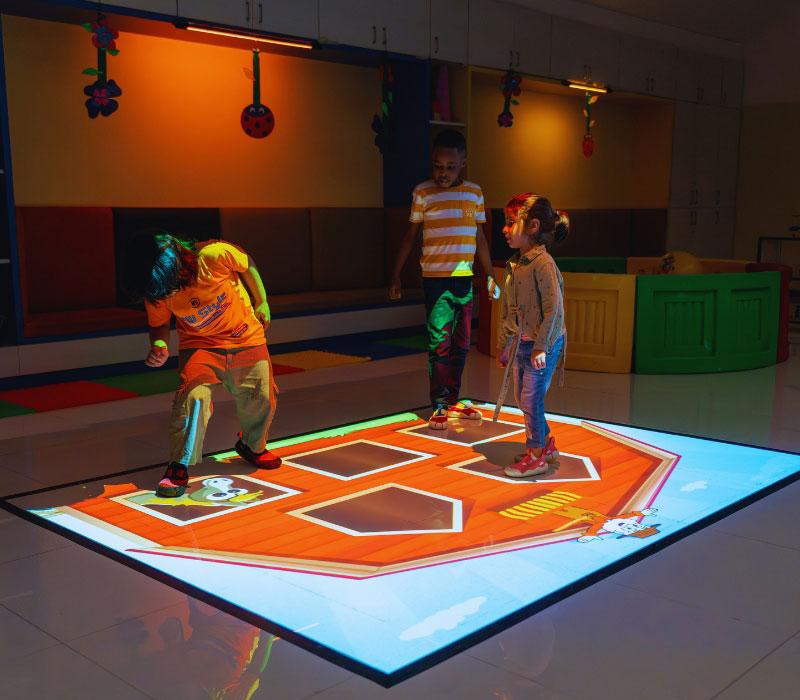
Interactive projection floor systems are among the most technologically sophisticated and visitor-engaging features available to a boutique play arena and represent a significant point of differentiation from the conventional soft play offering. These systems project dynamic visual environments onto the play floor surface and respond in real time to the movement of children across them, creating reactive game-like experiences that combine physical activity with digital engagement. The best systems offer a library of regularly updated content programmes spanning collaborative games, individual challenges, and creative exploration modes, ensuring that the experience remains fresh across multiple visits. Installation requires a robust floor surface specification, sufficient ceiling height for the projector mounting, and a content management system that allows the venue team to schedule and update programmes without specialist technical support.
Parent Cafe Lounges
The parent cafe lounge is the commercial and experiential anchor of the boutique play venue’s adult proposition and must be engineered with the same care and ambition as every children’s zone. Direct sightlines from every seating position to all children’s play zones are a non-negotiable spatial requirement. Beyond this, the lounge should be designed as a genuinely premium hospitality environment: natural materials, considered lighting levels that are calming rather than institutional, acoustic design that manages the ambient noise from the play areas without creating a sense of separation, and a food and beverage offer that draws on current specialty coffee and brunch culture rather than conventional cafe catering standards. The lounge is where parents form their primary opinion of the venue as a whole and where the word-of-mouth recommendation that drives new customer acquisition is generated.
Monetisation Framework: Building a Premium Revenue Architecture
A boutique soft play arena’s commercial viability depends on the breadth and depth of its revenue architecture. Venues that rely exclusively on session-based entry ticketing expose themselves to the volatility of footfall variation and fail to capture the full spending potential of a premium family demographic that is willing to invest significantly in experiences they value. The following monetisation framework outlines the full range of revenue streams available to a boutique play operator and their respective commercial characteristics.
Revenue Stream | Description | Revenue Type |
Subscription Memberships | Monthly and annual family access passes with tiered benefit structures | Recurring, loyalty-driving |
Branded Workshops | Art, movement, sensory, and STEAM activity sessions for booked groups | Programmed, high-margin |
Seasonal Decor Refresh Events | Holiday-themed play environments with accompanying ticketed events and packages | Demand surge, media-generating |
Influencer Family Events | Hosted private sessions for family content creators and brand collaboration events | Brand building, earned media |
Birthday Party Packages | Private room hire with curated F&B, themed decor, and dedicated staff support | Premium, pre-booked |
Parent Lounge F&B | Hospitality-grade cafe menu serving adults throughout the visit | Ancillary, high-margin |
Subscription Memberships
A well-structured subscription membership programme is the single most powerful tool available to a boutique soft play operator for building long-term commercial resilience. Monthly and annual family membership tiers, each offering a clearly differentiated value proposition, convert the venue’s most enthusiastic visitors into a loyal recurring revenue base that provides financial stability independent of session-by-session demand variation. The most effective membership programmes combine straightforward financial value, typically a break-even point at two to three visits per month, with a genuine sense of community belonging: member-exclusive events, early access to seasonal programming, priority birthday party booking, and the particular pleasure of being a known and welcomed regular at a venue they love. Membership acquisition should be treated as a marketing priority from day one, with conversion pathways built into the entry and exit visitor flow and active referral incentives that leverage the strong social networks of the premium family demographic.
Branded Workshops
Programmed branded workshops represent one of the most attractive revenue streams in the boutique play arena model because they combine high per-head margins with strong developmental and educational credentials that resonate powerfully with the values of the premium parent demographic. Art workshops, movement and dance sessions, sensory play classes, and STEAM activity programmes, delivered by qualified facilitators in the venue’s creative studio space, transform the venue from a passive play environment into an active learning destination. Workshop programmes also drive weekday footfall during the school holiday periods that are among the highest-demand windows in the family entertainment calendar, and they provide a natural pipeline for membership conversion among parents who discover the venue through a specific class before accessing the broader play environment.
Seasonal Decor Refresh and Events
Seasonal decor refresh events are among the most cost-effective demand generation tools available to a boutique play venue operator, creating compelling reasons for lapsed visitors to return and generating the kind of social media content that drives organic brand awareness at minimal marketing cost. A Halloween-themed transformation of the sensory pod into a gentle spooky environment, a winter wonderland version of the climbing module, or a spring garden reimagining of the projection floor content can be implemented using the modular design and programmable technology systems already in place without requiring significant additional capital expenditure. Seasonal events tied to these refreshes, including themed character visits, holiday crafting workshops, and exclusive member preview sessions, extend the commercial opportunity and create the sense of a venue that is always evolving.
Influencer Family Events
The premium family lifestyle segment of social media is one of the most commercially powerful earned media environments available to a boutique play venue, and influencer family events are the most direct mechanism for accessing it. Hosting private play sessions for family lifestyle content creators, with the venue styled and staffed to its absolute best standard, generates high-quality organic content that reaches exactly the demographic the venue is targeting, with the credibility of peer recommendation rather than paid advertising. These events require minimal direct expenditure beyond operational cost and the curation effort of identifying and hosting the right creators, but the brand reach and new visitor acquisition they generate can significantly outperform equivalent paid media investment. Brand collaboration events, where a relevant children’s lifestyle or parenting brand co-hosts a play event at the venue in exchange for joint content and audience access, extend this model further and add a direct revenue dimension through collaboration fees.
International Case Studies: Three Venues Defining Boutique Excellence
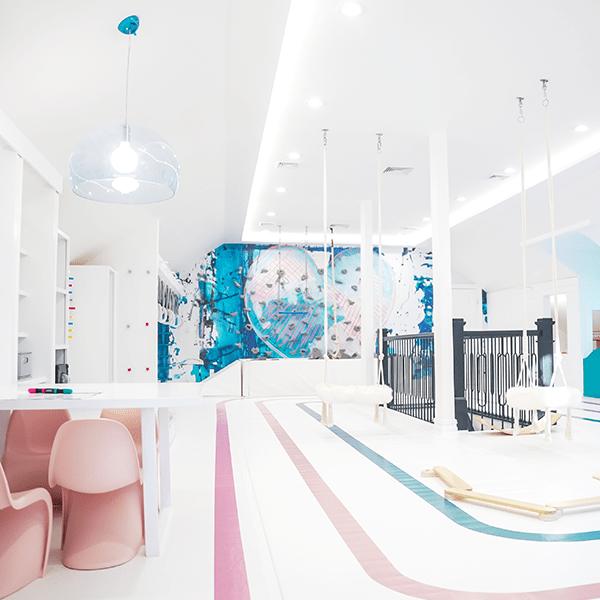
The global boutique family play market has produced a handful of venues that stand as genuine reference points for what is possible when design ambition, developmental rigour, and commercial sophistication are combined with consistent operational excellence. The following three venues represent distinct approaches to the boutique play format and offer directly applicable lessons for new venue developers.
01 | Oli Dubai, UAE OliOli in Dubai is widely regarded as one of the world’s finest children’s museum and play experiences and stands as a defining example of what boutique indoor play design can aspire to at the highest level of creative and operational execution. The venue spans 25,000 square feet across eight gallery spaces, each designed around a specific aspect of childhood curiosity and developmental engagement, from a water discovery gallery to a tinker lab, a flight gallery, and a dedicated gallery for children under four years old. What distinguishes OliOli from comparable premium play venues is the depth and integrity of its developmental philosophy: every exhibit and play environment has been designed in consultation with child development experts, and the experiential quality of each gallery reflects a genuine commitment to the educational and imaginative dimensions of play rather than simply its physical entertainment value. OliOli’s aesthetic is distinctive and globally recognised, blending warm natural materials, considered lighting design, and beautifully crafted play installations into an environment that parents find as genuinely beautiful as children find engaging. Its commercial model, which combines premium ticketed entry with branded workshop programming, membership offers, and private event hire, demonstrates the multi-stream revenue architecture that boutique play venues of this calibre can sustain. |
02 | Pororo Park Premium Zones Singapore Pororo Park in Singapore represents a compelling example of how intellectual property licensing and premium play venue design can be combined to create a destination experience with unusually strong brand loyalty and repeat visitation. Built around the globally popular Korean animated character Pororo and his friends, Pororo Park’s premium play zones deliver a fully immersive character world in which every scenic element, interactive installation, and programmed activity is integrated within the Pororo narrative universe. The venue’s success in Singapore, one of the world’s most demanding family entertainment markets, reflects both the power of its character IP and the quality of its play environment design, which meets the exceptionally high standards expected by Singapore’s affluent and internationally experienced family demographic. For developers considering the role of character IP licensing in a boutique play venue strategy, Pororo Park illustrates both the commercial benefits of a strong licensed brand and the design discipline required to integrate a character world into a physical play environment with genuine quality and coherence. The venue’s premium zone model, which separates the most immersive and experience-rich areas of the venue behind an additional fee tier, provides a directly applicable template for boutique play operators seeking to create a premium within a premium offering. |
03 | The Little Gym Experience Centers Global The Little Gym is one of the most globally successful children’s development franchise concepts and operates across more than 300 locations worldwide, offering a programme-led model that combines structured physical development classes with a premium play environment designed specifically to support the developmental objectives of its curriculum. What makes The Little Gym relevant as a case study for boutique soft play developers is its demonstration of how a programming-first approach to the play venue model can build the kind of deep parental loyalty and high-frequency repeat visitation that session-based ticketed models struggle to achieve. By placing structured, expert-facilitated developmental programming at the centre of its proposition rather than treating it as an add-on to a physical play environment, The Little Gym creates a value proposition that parents understand clearly, trust deeply, and commit to financially through term-based enrolment. Its experience centre design, which subordinates the physical environment entirely to the programming objectives, provides a useful counterpoint to the aesthetic-led design approach of venues like OliOli and illustrates the range of viable design philosophies within the broader boutique family play category. |
Operational Excellence: Engineering Consistency and Reducing Lifecycle Cost
The operational excellence of a boutique soft play arena is not a background function that supports the visitor experience from a distance. It is the discipline through which the quality of the designed experience is sustained day after day, visit after visit, across the full commercial life of the venue. The operational choices made before a venue opens, about cleaning protocols, staff ratios, maintenance schedules, and modular design specification, determine the lifecycle cost of the asset and the consistency of the experience it delivers far more than any single design decision.
Cleaning Protocols and Hygiene Standards
A boutique soft play venue operates within an environment of exceptionally high hygiene expectation from its target demographic. Affluent parents who are choosing a premium play destination for their children apply rigorous hygiene scrutiny and will withdraw their custom, and their recommendation, at the first sign of inadequate standards. Cleaning protocols must be engineered at the same level of rigour as the physical design of the venue, with between-session cleaning schedules specifying the exact products, methods, and time requirements for each zone and surface type, daily deep-clean protocols for all play equipment and soft furnishings, weekly sanitisation programmes for the foam pit and sensory pod materials, and monthly inspection cycles that assess material condition and flag maintenance requirements before they become visible quality issues. These protocols should be documented, trained, and monitored with the same discipline as any other operational standard.
Staff Supervision Ratios
Staff supervision ratios within the play environment are determined by a combination of regulatory requirements, insurance conditions, and the experiential standards of the premium positioning. A boutique play venue should plan for supervision ratios that meet or exceed regulatory minimums in every zone, with particular attention to the toddler sensory pod, the foam pit, and any zones containing elevated play structures. Beyond safety supervision, the premium positioning of the venue requires that all client-facing staff are trained and deployed as hospitality professionals as much as safety supervisors: greeting families warmly, engaging with children at their level, assisting parents with comfort and genuine attentiveness, and handling any service issues with the confidence and composure of a trained hospitality team.
Durable Modular Design and Lifecycle Cost Management
The modular design approach that best supports the guest experience refresh strategy of a boutique play venue also directly reduces its long-term lifecycle cost. When play structures are designed as systems of replaceable modular components rather than fixed bespoke installations, the cost of maintaining them at premium standard over time is dramatically lower than for a conventional fixed installation. Individual damaged or worn components can be replaced without taking the entire structure out of service. New elements can be introduced into an existing structure to refresh the play experience without the capital expenditure of a full replacement. Seasonal theming can be applied through modular decorative overlays rather than permanent modifications. Developers should specify modular design as a mandatory requirement in their play equipment procurement brief and should negotiate component replacement pricing and lead times as part of the original installation contract.
Frequently Asked Questions
The following questions address the most important considerations for developers and investors approaching the boutique soft play arena opportunity for the first time.
What distinguishes a boutique soft play arena from a standard premium play venue? |
The distinction lies primarily in the depth and integration of the design intent. A standard premium play venue may invest in better furniture, cleaner finishes, and a higher-quality cafe offering than a conventional soft play centre, but these improvements are essentially upgrades within the same conceptual framework. A boutique soft play arena, by contrast, is conceived from the outset as a holistic hospitality and developmental environment in which every element, from the material specification of the toddler sensory pod to the menu curation of the parent lounge, is designed as part of a coherent whole. The result is an experience that feels qualitatively different rather than merely quantitatively better, and that commands a meaningfully higher level of parent loyalty and spending willingness. |
How does an interactive projection floor enhance the commercial performance of a soft play venue? |
An interactive projection floor enhances commercial performance through several compounding mechanisms. It significantly extends average dwell time by providing an experience that children return to repeatedly within a single visit, which directly increases food and beverage spend per visit in the parent lounge. It provides a high-visibility visual differentiator that drives social media sharing, as the reactive digital environments are highly photogenic and generate the kind of organic content that reaches new potential visitors at no marketing cost. And its content programmability, which allows the venue to update the game and activity library regularly, gives the existing audience ongoing novelty that supports repeat visitation motivation alongside the physical play environment. |
What level of staff training is required to operate a boutique soft play venue to premium standards? |
Operating a boutique soft play venue to consistently premium standards requires a level of staff training that goes significantly beyond basic safety supervision certification. All client-facing staff require training in hospitality service standards, child developmental engagement techniques, detailed knowledge of the venue’s cleaning and safety protocols, and the particular interpersonal skills required to manage the diverse needs of families with children across a wide age range simultaneously. Venue managers and senior staff additionally require training in the operational management of the cafe, the booking and event management systems, and the maintenance protocols for all technology and play equipment systems. A structured onboarding programme of at least two weeks, combined with regular ongoing refresher training and a performance review cycle, is the minimum investment in team development that a premium positioning requires. |
How should seasonal decor refresh events be budgeted and planned? |
Seasonal decor refresh events are most cost-effective when planned as a programmed annual calendar at the beginning of the operational year rather than developed reactively as individual projects. A planned calendar allows the design and procurement team to source seasonal decor elements in advance at better pricing, to schedule installation during lower-footfall periods that minimise operational disruption, and to develop the associated marketing and event programming in sufficient time to drive maximum advance booking and media coverage. A typical seasonal refresh budget for a mid-scale boutique play venue ranges from INR 2 to 8 lakh per event depending on the scale of the environmental change and the extent of the associated programming, with the majority of cost recoverable through incremental ticket revenue, event package bookings, and membership acquisition driven by the refresh. |
How important is the developmental philosophy of a boutique play venue to its commercial positioning? |
The developmental philosophy of a boutique play venue is not simply a design brief or a marketing message. It is a commercial asset of genuine value that directly influences the willingness of the premium parent demographic to pay a price premium, to convert to membership, and to recommend the venue within their networks. Parents who choose premium play experiences for their children are typically highly engaged with questions of child development and are applying genuine evaluative scrutiny to the developmental quality of the experiences they invest in. A venue that can articulate clearly and demonstrate convincingly why its play environments support specific developmental outcomes will consistently outperform a venue of equivalent aesthetic quality that cannot. Investing in developmental consulting expertise during the design process and communicating the developmental credentials of each zone actively and clearly to visiting parents is among the highest-return differentiation investments a boutique play operator can make. |
What are the most common design mistakes in boutique soft play arena development? |
The most common design mistake is under-specifying the parent lounge relative to the children’s play environment, treating it as a secondary amenity rather than a co-primary commercial space. Venues that make this error consistently achieve lower average spend per visit, shorter dwell times, and weaker word-of-mouth performance than those that invest in the parent experience equally. The second most common mistake is selecting play equipment on the basis of visual appeal alone without adequate attention to hygiene maintainability, modular replaceability, and long-term durability under public use conditions. Beautiful equipment that degrades quickly or requires full replacement rather than component-level repair destroys margin rapidly. A third common error is failing to design the visitor flow to support the conversion pathways for membership, party bookings, and workshop enrolment, leaving significant revenue on the table that a more intentional spatial design would have captured. |
Partner with Peach Prime Consultancy
Engineering a boutique soft play arena that delivers genuine premium quality, sustains that quality consistently over years of operation, and generates the financial returns that justify the investment is a complex, multidisciplinary challenge. The integration of aesthetic design ambition, developmental play philosophy, hygienic engineering specification, and commercial revenue architecture requires specialist expertise that spans all of these domains simultaneously, and the cost of misaligning any one of them with the others is paid in both visitor experience quality and financial performance.
Peach Prime Consultancy provides end-to-end planning and design support for boutique soft play arena projects from initial concept through to operational launch and beyond. Our team brings deep expertise in premium family entertainment venue design, developmental play environment specification, hospitality integration, and commercial financial modelling, ensuring that every aspect of the venue is engineered for both experiential excellence and sustainable commercial return.
From the first feasibility conversation to the detailed design brief, the technology and equipment specification, the operational playbook, and the investor-ready financial model, Peach Prime Consultancy ensures that your boutique play arena is developed with the precision, ambition, and commercial rigour that premium positioning demands. Visit www.peachprime.in to explore our services or contact our team to arrange your planning consultation.
WHAT PEACH PRIME DELIVERS | Boutique play arena concept development and experience zoning design, developmental play environment specification and equipment procurement guidance, parent lounge hospitality integration, revenue architecture and monetisation framework design, operational playbook development, and full financial modelling for investor and lender presentations. |