

A strategic investment and design guide for developers, hospitality entrepreneurs, and family entertainment investors exploring the premium end of the indoor play market.
Introduction: From Play Area to Premium Destination
For most of its commercial history, soft play has occupied an uncomfortable middle ground in the family entertainment market. Parents tolerated it as a functional childcare solution on rainy afternoons. Children loved it for obvious reasons. But as a business, the conventional soft play arena struggled to build the kind of brand loyalty, pricing power, and margin structure that characterises genuinely premium leisure destinations. It was useful, but it was rarely an experience that families sought out with enthusiasm and returned to with regularity.
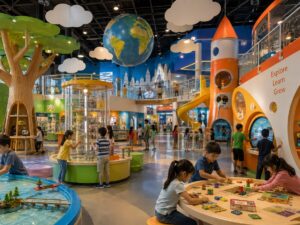
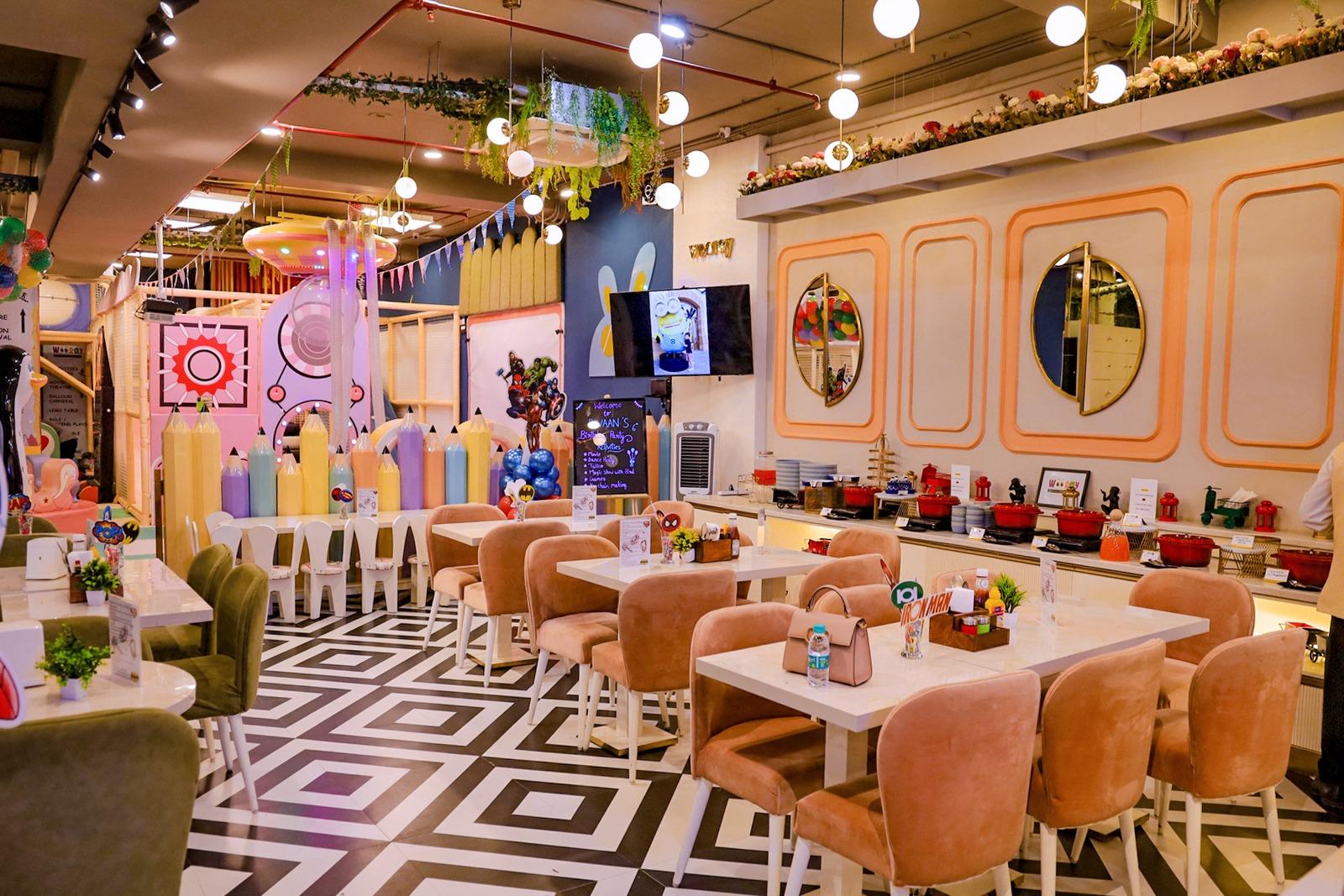
That is changing. Across urban markets in the United Kingdom, the Middle East, the United States, and increasingly across India’s metropolitan centres, a new generation of soft play venues is redefining what the format can be. These are not upgraded versions of the bright primary-coloured ball pit and foam slide model that defined the category for decades. They are carefully designed, hospitality-led environments that treat the experience of a family visit as a holistic proposition: beautifully considered spaces where children play in age-appropriate, sensory-rich environments while parents sit in genuinely comfortable, aesthetically pleasing lounges with quality food and beverage, natural light, and the particular pleasure of watching their children genuinely engaged and safe.
For investors and developers, this repositioning of soft play as a premium hospitality asset represents a compelling opportunity. The underlying demand for high-quality indoor play experiences is growing, driven by urbanisation, the shrinking of residential space, the rise of experience-oriented consumer spending among affluent young families, and the commercial vacancy of a market segment that the conventional soft play model has persistently failed to serve at a premium level. This guide provides a structured framework for understanding the luxury soft play opportunity, designing a venue that delivers it, and building the commercial architecture that makes it financially sustainable.
MARKET SIGNAL | Search demand for premium soft play design, boutique indoor play lounge, aesthetic kids play cafe, and luxury family entertainment centre has risen sharply in recent years, reflecting a clear consumer appetite for a category that the market has been slow to supply at genuine premium quality. |
Why Luxury Soft Play Is Fundamentally Different
The distinction between a conventional soft play arena and a luxury family play lounge is not simply a matter of price point or aesthetic finish. It reflects a fundamentally different understanding of who the customer is, what they are paying for, and what constitutes value in the transaction. Getting this distinction clear is essential for any developer considering an entry into the premium segment, because the design decisions, operational standards, and commercial structures that define a genuinely luxury offering are different in kind, not just in degree, from those that characterise the conventional model.
The Parent as an Equal Customer
In a conventional soft play venue, the parent is functionally a chaperone: present but not catered to in any meaningful way beyond a plastic chair, a vending machine, and a view of their child. In a luxury family play lounge, the parent is an equal and primary customer, and the quality of their experience is as carefully considered as the quality of the child’s play environment. This means genuinely comfortable lounge seating with considered upholstery and ergonomics, a cafe menu that reflects current food and beverage trends rather than institutional catering standards, an aesthetic environment that parents find genuinely pleasant rather than merely tolerable, and a level of service from the venue’s team that creates the feeling of hospitality rather than childcare supervision.
This shift has profound commercial implications. A parent who is genuinely comfortable and well-served will spend more time in the venue, consume more food and beverage, and feel more positively about the overall experience than one who is simply waiting for their child’s play session to end. Extended dwell time directly translates to higher average spend per visit, and the quality of the parental experience is the primary driver of the word-of-mouth recommendation and social media sharing that builds the brand reputation of a premium play venue.
Designer Interiors and Curated Aesthetics
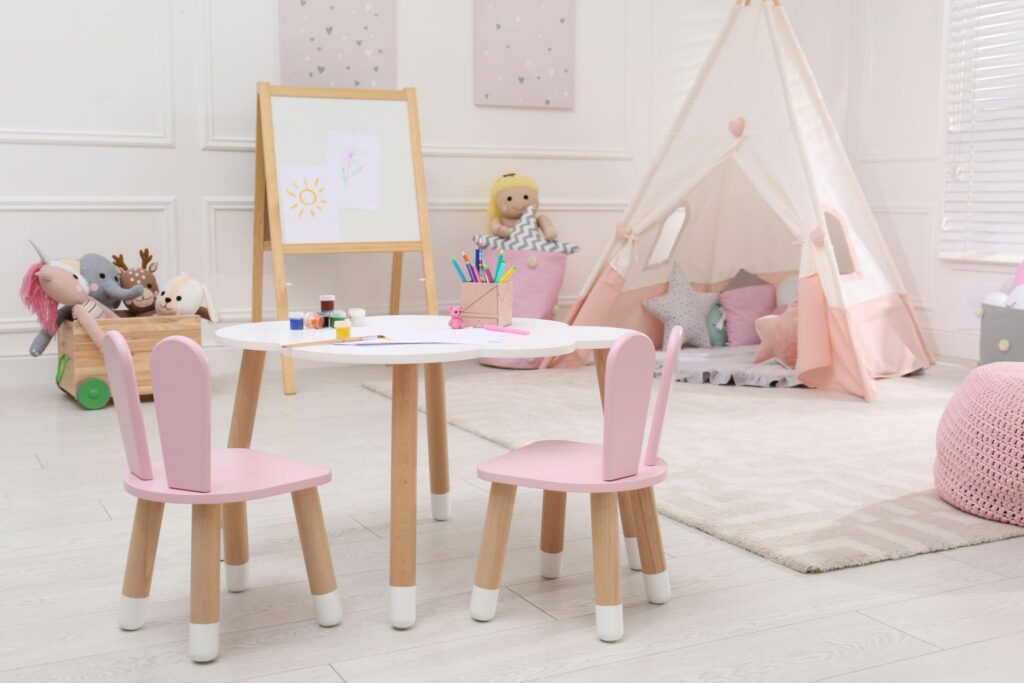
The physical environment of a luxury soft play venue is its most powerful brand statement and its most important marketing asset. In an era where family experience venues are judged as much by their photogenic quality on social media as by any other attribute, an interior that is genuinely beautiful, distinctive, and carefully considered is not a cosmetic luxury but a commercial necessity. Designer interiors in the luxury soft play context means thoughtful colour palettes that work harmoniously across both the adult lounge and the children’s play areas, materials and finishes selected for both aesthetic quality and hygienic maintenance, bespoke or high-quality branded play structures that are visually integrated into the overall interior rather than dropped into it, natural light maximised wherever the space allows, and decorative and brand elements that tell a coherent visual story about the venue’s character and values.
Hygienic Modular Structures and Sensory Play Pods
The play equipment at the heart of a luxury soft play venue must meet a significantly higher standard than the conventional market in both hygienic specification and sensory design quality. Hygienic modular structures, fabricated from antimicrobial materials with seamless surfaces that resist bacterial accumulation and are easily cleaned to medical-grade standards, are the baseline specification for a premium offering. Sensory play pods, which create dedicated environments for different types of developmental play including tactile exploration, visual stimulation, auditory discovery, and proprioceptive challenge, extend the play offer beyond gross motor activity and give the venue a genuine educational dimension that resonates strongly with the values of the premium parent demographic.
Age Zoning and Developmental Design
A luxury play venue respects the developmental realities of its youngest visitors by creating genuinely distinct play environments for different age groups rather than placing toddlers and older children in the same undifferentiated space. Dedicated toddler zones with appropriately scaled equipment, softer surfaces, reduced stimulation, and direct sightlines for supervising parents are a non-negotiable design requirement for a premium offering targeting the full family demographic. Older children’s zones can offer greater physical challenge, more complex interactive elements, and a wider range of play modalities, from imaginative role play environments to physical skill challenges, that sustain engagement across the longer visit durations that premium venues should be designed to support.
Revenue Architecture: Building a Multi-Stream Commercial Model
The commercial strength of a luxury family play lounge relative to a conventional soft play venue lies not in any single revenue stream but in the breadth and depth of its overall revenue architecture. By serving both children and parents as primary customers within a premium hospitality environment, and by creating multiple dimensions of the experience that carry distinct commercial value, a well-designed luxury play venue can achieve a revenue per square metre and a margin structure that the conventional model cannot approach.
Revenue Stream | Format | Commercial Profile |
Premium Entry Tickets | Timed sessions with peak and off-peak pricing | Primary, high-frequency |
Membership Subscriptions | Monthly or annual family access passes | Recurring, loyalty-building |
Birthday Party Packages | Private room hire with themed F&B and decor | Premium, pre-booked |
Parent Lounge F&B | Cafe menu for adults while children play | Ancillary, high-margin |
Branded Merchandise | Character goods, soft toys, apparel | Ancillary, brand-extending |
Private Hire and Events | Full or partial venue hire for private occasions | High-yield, low-frequency |
Add-On Experiences | Sensory pod sessions, art workshops, activity classes | Upsell, experience-deepening |
Premium Entry Pricing and Timed Sessions
Premium entry pricing is justified by the quality of the experience and is sustainable only when that quality is consistently delivered. A luxury soft play venue should price its sessions at a level that reflects the premium positioning of the offering and attracts the target demographic without alienating it. Timed session structures, typically 90 minutes to two hours in length, manage venue capacity and create a sense of occasion around the visit that reinforces its premium character. Peak and off-peak pricing tiers allow the venue to maximise revenue during high-demand periods while maintaining accessible pricing during quieter sessions that might otherwise go unfilled.
Membership Models
A well-designed membership programme is among the most commercially powerful tools available to a luxury play venue operator. Monthly or annual family memberships that offer unlimited or discounted access, combined with exclusive member benefits such as priority booking, member-only events, and F&B discounts, build the loyal repeat visitor base that underpins long-term revenue stability. Membership models also generate predictable recurring revenue that smooths the cash flow variability inherent in session-based ticketing and provides a financial buffer during lower-demand periods. A tiered membership structure, with different benefit levels at different price points, allows the venue to capture the full range of demand intensity within its target demographic.
Birthday Party and Private Event Packages
Birthday party packages are consistently the highest per-head revenue event format available to a family play venue and should be developed and marketed as a flagship product rather than a secondary service. A premium birthday party package combines exclusive use of a private party room, a curated food and beverage menu, themed decor aligned with the venue’s aesthetic, dedicated staff support throughout the event, and branded takeaway elements for guests. Pricing these packages at a level that reflects their hospitality quality, their convenience value for busy parents, and the exclusive use of premium space they provide is central to their commercial contribution. A venue with two dedicated party rooms of appropriate size and quality can derive a significant proportion of its total monthly revenue from this single product category on weekends.
Parent Lounge Food and Beverage
The parent lounge cafe is the commercial engine that transforms a play venue into a hospitality destination. A well-specified cafe offering, covering quality coffee and specialty beverages, a food menu that addresses breakfast, brunch, and light lunch occasions, and a selection of children’s food that reflects genuine nutritional care rather than convenience catering, can achieve food and beverage revenue per visitor that approaches the ticket revenue itself. This requires investment in commercial kitchen infrastructure, trained barista and service staff, and a menu development process that takes the cafe as seriously as any standalone hospitality venue would. The return on that investment, both in direct F&B revenue and in the positive impact on overall visitor satisfaction and dwell time, makes it among the highest-return expenditure decisions in the venue’s development.
Design and Safety Essentials
The design of a luxury family play lounge must satisfy two sets of requirements that are in constant productive tension: the aesthetic and experiential standards of a premium hospitality environment, and the rigorous safety and hygiene standards that are non-negotiable in any venue serving young children. Managing this tension well is one of the defining competencies of a specialist luxury play venue designer, and it is why the design process for these venues benefits enormously from experienced sector-specific expertise.
Antimicrobial Materials and Hygienic Specification
Every material and surface within the children’s play areas must be selected with hygienic maintenance as a primary specification criterion alongside aesthetic quality. Antimicrobial foam formulations for padded surfaces, non-porous polymer coatings for hard play structure components, and seamless welded seams that eliminate crevices where bacteria can accumulate are the baseline requirements for a premium offering. Cleaning protocols must be designed into the operational plan from the outset, with adequate time between sessions for thorough cleaning of all play surfaces and a deep cleaning schedule that addresses areas not accessible during standard between-session maintenance. Communicating hygiene standards actively and visibly to visiting parents, through transparent cleaning logs, visible staff cleaning activity, and clear signage about materials and protocols, is a significant brand differentiator in the premium segment.
Padded Structural Framing and Impact Safety
All structural framing within the children’s play environment must be fully padded and covered to eliminate hard-edge impact risk at any point accessible to playing children. The specification of padding materials should address both the firmness required for effective impact absorption and the durability required for sustained public use. All play equipment must comply with relevant national and international safety standards for children’s play equipment in commercial settings, with certification documentation maintained on file and available for inspection. Regular safety audits by qualified play equipment inspectors, conducted at the intervals specified by the relevant standards, are a mandatory operational requirement.
CCTV Monitoring and Supervision Design
Comprehensive CCTV coverage of all areas of the play environment, monitored in real time by a dedicated staff member during all operating hours, is both a regulatory requirement in most jurisdictions and a significant reassurance to visiting parents. Camera placement should be designed to ensure complete coverage of all zones without blind spots, and monitor stations should be positioned to allow the supervising team member to intervene in any area of the venue within seconds of identifying a concern. Staff deployment ratios within the play areas should be specified in line with or above regulatory requirements, with additional staff during peak capacity periods.
Fire Compliance and Emergency Protocols
A children’s play venue carries particular fire compliance obligations given the vulnerability of its primary users and the complexity of its spatial environment. Fire safety design must be integrated from the earliest stages of the spatial planning process, with fire-rated materials specified for all relevant elements of the build, clear and unobstructed evacuation routes from all areas of the venue, fire suppression systems specified in line with building regulations, and staff training in child-inclusive emergency evacuation procedures as a mandatory onboarding requirement. Regular fire drills involving the full operations team should be conducted at intervals determined by the venue’s fire safety plan.
Global Benchmarks: Three Venues Setting the Premium Standard
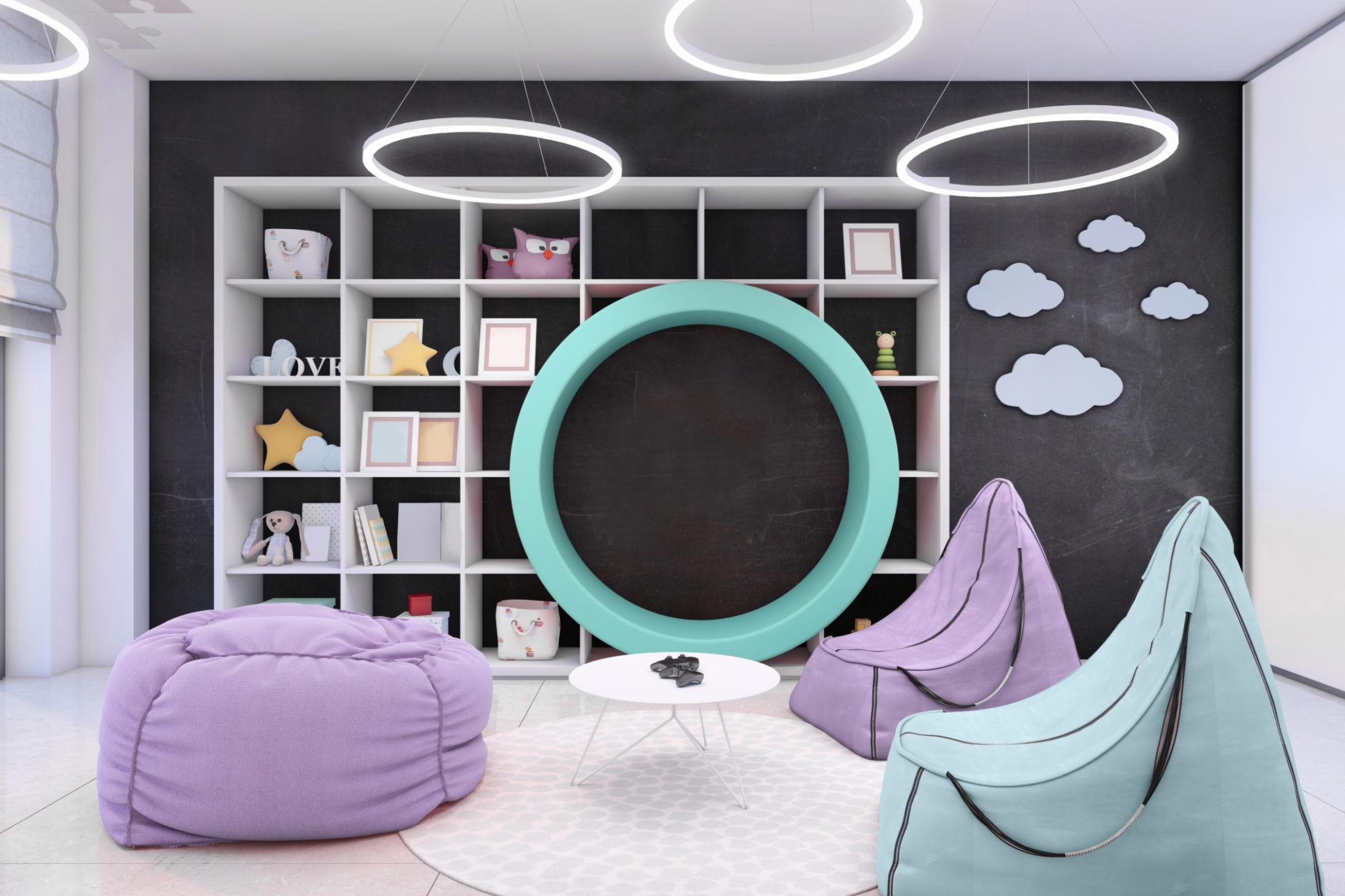
The luxury soft play and premium family play lounge sector has developed a compelling body of global precedent across diverse markets and brand philosophies. The following three venues represent distinct approaches to the premium positioning of indoor children’s play, each offering direct and applicable lessons for developers planning new venues.
01 | KidZania Toddler Zones Global (Multiple Cities) KidZania is one of the world’s most recognised family entertainment brands and operates across more than 24 cities globally, offering children an immersive role-play environment built around miniature versions of real-world professions and civic institutions. Within its broader venue proposition, KidZania’s dedicated toddler zones represent a particularly instructive model of age-appropriate premium play design. These zones isolate the youngest visitors from the higher-energy activity areas of the main venue and create a sensory environment calibrated specifically for toddler developmental needs: gentler stimulation, softer surfaces, supervised interaction design, and direct parent proximity. What makes the KidZania toddler zone model relevant for luxury soft play developers is its demonstration that age-segmentation within a play venue is not simply a safety measure but a genuine experiential quality enhancement. When toddlers play in an environment genuinely designed for them, the quality of their engagement, and the quality of the parent’s experience observing that engagement, is significantly higher than in a mixed-age undifferentiated play space. The KidZania brand’s global consistency and premium positioning also illustrates the commercial value of investing in design quality as a brand foundation. |
02 | KidZilla Luxury Play Middle East KidZilla represents the Middle Eastern approach to luxury family play, a market that has developed some of the world’s most sophisticated premium family entertainment offerings, driven by high consumer spending power, intense competition for family leisure destinations, and a cultural emphasis on the quality of family experiences. KidZilla’s venues combine elaborately designed play environments with premium parent-facing hospitality spaces, creating a dual-proposition model that speaks equally to the child’s desire for physical and imaginative engagement and the parent’s expectation of a genuinely comfortable and aesthetically refined environment. The venue’s design vocabulary, which draws on premium hospitality aesthetics rather than conventional children’s entertainment design codes, positions it as a family lifestyle destination rather than a childcare utility, commanding premium pricing and driving the kind of social sharing that builds organic brand reach in affluent family demographics. For Indian developers in particular, the Middle Eastern luxury play model offers highly relevant reference points given the comparable profile of the target consumer segment in India’s metropolitan markets. |
03 | Peekaboo Play Cafe USA Peekaboo Play Cafe represents the boutique end of the American luxury soft play market and has established a compelling model for how a smaller-format, independently operated premium play venue can compete effectively against larger entertainment brands through the quality of its curation, its community orientation, and its hospitality standards. Operating across multiple locations in the United States, Peekaboo combines a thoughtfully designed play environment for children under eight with a genuinely cafe-quality beverage and food offering for parents, creating a neighbourhood destination that families integrate into their regular weekly routine rather than visiting occasionally as a special treat. The Peekaboo model is instructive for developers planning boutique-scale luxury play venues in urban markets, demonstrating that the premium family play lounge format does not require a large footprint or a major capital investment to deliver a commercially viable and experientially excellent product. Its emphasis on community programming, including parent and baby groups, toddler music classes, and sensory play workshops, as a driver of membership conversion and repeat visitation, is particularly applicable to venues targeting the premium urban family demographic. |
Strategic Advantage: Why Premium Positioning Delivers Superior Returns
The strategic case for positioning a new indoor family play venue at the premium end of the market is compelling and is supported by the structural economics of the category as much as by the consumer demand trends that are driving it.
Pricing Power and Margin Structure
Conventional soft play venues compete primarily on price and proximity, which creates a persistent margin pressure that limits their ability to invest in quality and drives a race to the bottom on experience standards. A genuinely premium positioning breaks this dynamic entirely. A luxury family play lounge that delivers an experience of unambiguous quality to its target demographic commands pricing that is two to four times the market average for standard soft play admission, and this premium is sustained rather than eroded over time because it is grounded in genuine and visible experience quality rather than simply in positioning claims. The margin implications of this pricing power, combined with the multi-stream revenue architecture that a premium venue can support, create a fundamentally different financial profile from the conventional model.
Targeting Affluent Urban Families
The target demographic for a luxury family play lounge, affluent urban families with young children, is among the most commercially attractive consumer segments available in any market. This demographic combines strong discretionary spending power with high spending motivation on experiences that benefit their children, intense time pressure that creates demand for high-quality local leisure destinations, and strong social connectivity that drives word-of-mouth recommendation and social media sharing. In India’s metropolitan centres, the rapid growth of this demographic, driven by rising household incomes, the expansion of the dual-income family model, and the increasing urbanisation of aspirational consumption patterns, creates a particularly timely market entry opportunity for well-designed premium family play venues.
Defensibility and Brand Differentiation
A premium positioning, once established through consistent delivery of genuine quality, creates a significantly more defensible competitive position than a mid-market or value positioning. Families who have found a play venue that consistently delivers an excellent experience for their children and an enjoyable environment for themselves are strongly loyal and are not easily displaced by a new entrant offering marginally lower prices. The aesthetic and hospitality investments that define a luxury play venue also create a visual and experiential brand signature that is difficult for competitors to replicate quickly, providing a period of effective competitive insulation that the operator can use to build the membership base and community loyalty that sustains long-term performance.
Frequently Asked Questions
The following questions reflect the most common areas of inquiry from investors, developers, and entrepreneurs exploring the luxury family play lounge opportunity.
What is the ideal floor area for a viable luxury family play lounge? |
A boutique luxury play lounge can operate effectively from as little as 2,000 to 3,000 square feet of net usable floor area, provided the space is designed with exceptional efficiency and the venue focuses on quality of experience rather than breadth of play equipment. Mid-scale venues targeting a fuller range of revenue streams, including multiple party rooms, a full-service cafe, and distinct play zones for different age groups, typically require between 4,000 and 8,000 square feet. Larger flagship venues in high-footfall urban locations may extend to 10,000 square feet or beyond, but scale should be driven by market demand analysis and financial modelling rather than ambition alone. The revenue per square foot in this format is significantly higher than conventional soft play, which means a smaller, better-designed venue consistently outperforms a larger, poorly curated one. |
How do luxury soft play venues justify premium pricing to parents? |
Premium pricing in this category is justified and sustained by a combination of visible quality signals that parents can assess before and during their visit. A beautifully designed interior that parents find genuinely pleasant to spend time in communicates value immediately and viscerally. High-quality food and beverage that competes with standalone cafe standards rather than institutional catering creates a hospitality dimension that parents experience directly. Play equipment that is manifestly cleaner, better maintained, and more thoughtfully designed than conventional alternatives provides reassurance about both safety and developmental value. And the overall atmosphere of calm, considered attention to detail that a well-run premium venue delivers creates the feeling, which parents will pay for willingly, that this is a place that takes their family seriously. |
What is the typical payback period for a luxury soft play investment? |
Payback periods for luxury soft play venues vary based on location, fit-out investment, market size, and the quality of the operational execution, but well-designed and well-operated venues in strong urban markets typically achieve payback within 36 to 54 months. The multi-stream revenue model, which combines ticketed entry, memberships, party packages, F&B revenue, and private hire, creates a more resilient and faster-recovering financial profile than single-stream entertainment assets. Venues that invest adequately in membership programme development from the outset tend to achieve breakeven more quickly, as recurring membership revenue provides a stable base income that reduces dependence on session-by-session ticket sales. |
How important is the cafe component to the overall financial model? |
The cafe component is not a secondary amenity but a core revenue driver in the luxury family play lounge model. In well-operated venues, parent lounge food and beverage revenue typically accounts for 20 to 35 per cent of total venue revenue and carries significantly higher margins than entry ticket revenue when managed with hospitality-grade operational standards. Beyond the direct financial contribution, a high-quality cafe experience is the primary driver of extended dwell time, positive word-of-mouth recommendation from parents, and social media sharing that builds brand awareness organically. Developers who treat the cafe as a box to be ticked rather than a hospitality destination to be curated consistently underperform relative to those who invest in it as a genuine commercial priority. |
What makes a membership model work effectively in this category? |
An effective membership model in a luxury play lounge context combines genuine financial value for the member with a strong sense of community and belonging that makes membership feel like an identity choice rather than simply a discount arrangement. The financial value should be clearly calculable: a family that visits twice a month should be able to see unambiguously that membership saves them money relative to paying per session. The community dimension is built through member-only events, priority access to popular sessions, a dedicated communication channel such as a member app or newsletter, and the sense that members are known and valued by the venue’s team. Venues that invest in this community dimension consistently achieve higher membership renewal rates and stronger word-of-mouth member acquisition than those that treat membership purely as a transactional pricing tool. |
How can a luxury play lounge sustain demand and avoid visitor fatigue over time? |
Sustaining demand and preventing visitor fatigue requires a structured programme of content and experience refresh that gives the existing audience ongoing reasons to return. Seasonal play environment updates, which introduce new thematic elements, rotated play equipment, or temporary sensory installations, keep the physical experience feeling fresh for regular visitors. A calendar of programming events, including parent and baby sessions, themed play days, art and craft workshops, and educational activity classes, adds dimension to the visitor experience and creates multiple visit occasions beyond the standard open-play session. Membership community events exclusive to subscribers reinforce loyalty and create social motivation to remain engaged with the venue. The venues that sustain strong performance over three to five years and beyond are invariably those that plan their content and programming calendar with the same rigour they applied to their original design. |
Work with Peach Prime Consultancy
Designing and launching a boutique luxury soft play arena requires the kind of integrated specialist expertise that bridges premium hospitality design, children’s developmental play, safety compliance, and commercial financial modelling simultaneously. The decisions made at the concept and planning stage, about spatial layout, play zone configuration, cafe specification, membership architecture, and revenue mix, determine the financial performance of the venue for its entire operating life.
Peach Prime Consultancy designs boutique soft play arenas with optimised layouts and rigorous financial modelling that ensure every square foot of the venue contributes to its commercial performance. Our planning methodology integrates the aesthetic ambitions of a premium hospitality concept with the operational realities of a family play venue serving hundreds of visitors daily, delivering designs that are beautiful, functional, safe, and commercially robust.
Whether you are evaluating the feasibility of a luxury play lounge in a specific location, developing a concept for investor presentation, or ready to move into detailed design and fit-out planning, Peach Prime Consultancy provides the structured expert support that reduces execution risk and maximises the return on your investment. Visit www.peachprime.in or reach out to our team directly to begin your planning consultation.
WHAT PEACH PRIME DELIVERS | Boutique play venue concept development and spatial layout design, age zone planning and sensory design specification, revenue architecture and financial modelling for investor presentation, F&B concept integration and membership programme design, safety compliance planning, and full operational readiness support. |