

A comprehensive planning guide for investors, venue developers, and entertainment entrepreneurs ready to capitalise on the fastest-growing format in immersive walkthrough attractions.
Introduction: The Rise of the Narrative Maze
Something fundamental has shifted in how people choose to spend their leisure time. Across age groups, demographics, and geographies, consumers are turning away from passive forms of entertainment, where they sit, watch, and observe, and toward participatory formats where they move, decide, choose, and affect outcomes. This shift is not a passing trend. It reflects a deeper evolution in the expectations that audiences bring to every entertainment experience, shaped by years of interactive gaming, personalised digital media, and the growing cultural currency of shared physical experiences.
Interactive narrative maze attractions sit at the precise intersection of this shift. They combine the physical pleasure of spatial exploration and puzzle-solving with the emotional engagement of immersive storytelling and the intrinsic motivation of game-based decision-making. Unlike traditional maze attractions, which offer a single fixed experience with a beginning, a middle, and an end, narrative mazes allow visitors to genuinely influence the story they inhabit. They make choices, solve missions, interact with live or digital characters, and arrive at outcomes that differ meaningfully from one visit to the next.
For investors and developers, this format offers something that very few entertainment asset classes can deliver: strong differentiation from competing attractions, a natural mechanism for repeat visitation driven by story variation and replayability, and a scalable content model that allows the underlying physical infrastructure to support an evolving programme of narrative experiences without full reconstruction. This blueprint provides a structured framework for understanding, planning, and launching an interactive narrative maze attraction that delivers both exceptional visitor experiences and sustainable commercial returns.
MARKET CONTEXT | Consumer search demand for immersive maze experiences, story-based walkthrough attractions, interactive adventure mazes, and live narrative entertainment has grown significantly in recent years, driven by a broad cultural shift toward participatory and physically engaged entertainment formats across families, teens, corporate groups, and tourism markets. |
Why Narrative Maze Attractions Are Gaining Momentum
The commercial momentum behind narrative maze attractions is not accidental. It is the product of several converging forces in consumer behaviour, entertainment technology, and the economics of the experience economy that together make this format one of the most compelling opportunities in the immersive entertainment sector today.
The Shift from Passive to Participatory Entertainment
The entertainment landscape has been reshaped over the past decade by the ubiquity of interactive digital experiences. A generation that has grown up with video games, social media, and on-demand personalised content now applies those same expectations to physical entertainment venues. When a walkthrough attraction asks visitors to simply follow a path and observe what is around them, it is competing not just with other physical attractions but with the full richness of interactive digital entertainment available at home. The venues that succeed in this environment are those that meet visitors at their level of expectation, offering agency, consequence, and the particular satisfaction of a challenge that demands genuine participation.
Multi-Demographic Appeal
One of the most commercially valuable characteristics of a well-designed narrative maze is its ability to engage genuinely diverse visitor demographics within a single experience framework. Families with children find the combination of physical exploration and story-driven discovery compelling for all ages simultaneously. Teenagers and young adults are drawn to the game mechanics, the social dynamics of collaborative puzzle-solving, and the shareable quality of a vivid, out-of-the-ordinary experience. Corporate groups find the format ideally suited to team-building and leadership development programming, with the maze structure providing natural opportunities to observe and reward different behavioural styles under mild pressure. And for tourism-driven markets, a narrative maze with strong visual identity and a distinctive story world offers the kind of memorable, photographable experience that drives organic social media reach and destination appeal.
Repeat Visitation as a Structural Advantage
Most entertainment attractions face a fundamental challenge with repeat visitation: once visitors have experienced the attraction once, there is no inherent reason to return unless the product itself changes. Narrative maze attractions solve this problem structurally. Because the story can branch, because different pathways lead to different outcomes, and because the entire experience can be refreshed through seasonal story expansions and limited-time narrative overlays without full reconstruction, visitors have genuine reasons to return. This structural advantage is enormously valuable from an investor perspective, as it increases the revenue per square metre of the physical footprint over time and reduces the dependence on constantly acquiring new first-time visitors to sustain attendance.
Comparative Capital Efficiency
Relative to ride-based attractions, which require substantial mechanical capital expenditure, ongoing engineering maintenance, and lengthy regulatory approval processes, narrative maze attractions offer a more capital-efficient route to delivering premium immersive experiences. The primary investment is in scenic design, content creation, atmospheric technology, and story development rather than in mechanical systems. This shifts the risk profile of the investment in ways that are generally favourable: content and atmosphere can be updated incrementally, whereas mechanical systems represent large, indivisible capital commitments with extended refresh cycles.
Core Investment and Planning Considerations
Building a commercially viable narrative maze attraction requires careful integration across eight core planning domains. Each domain represents a distinct set of decisions that must be made with both creative ambition and operational rigour. The following breakdown addresses the essential considerations within each domain and highlights the interdependencies that make integrated planning essential.
Story Architecture with Branching Paths
The narrative architecture of the maze is its most fundamental asset. A well-constructed story world for a narrative maze must simultaneously satisfy two distinct requirements that are in creative tension with each other. It must be rich and emotionally engaging enough to motivate genuine investment from visitors, drawing them into the characters, stakes, and mysteries of the story world. And it must be structurally robust enough to support branching pathways and multiple valid outcomes without becoming incoherent or leaving visitors confused about what they are doing and why.
Achieving this balance requires professional story and game design expertise. The narrative should be built around a clear dramatic premise that is immediately comprehensible, characters or factions with distinct and memorable identities, a set of missions or challenges that are meaningfully connected to the story rather than arbitrary puzzle exercises, and at least three to five distinctly different story outcomes that visitors can reach through different pathway combinations. The story world should also be designed with expansion in mind: new narrative layers, seasonal overlays, and character additions should be architecturally possible within the established story framework without requiring fundamental restructuring.
Modular Scenic Design for Flexible Layouts
The physical design of the maze environment must serve both the atmospheric requirements of the story world and the operational requirements of a high-throughput public attraction. Modular scenic design, where the built environment is conceived as a system of reconfigurable components rather than a fixed permanent installation, is the approach that best satisfies both requirements simultaneously. Modular design allows the venue to refresh the physical experience for returning visitors by reconfiguring pathway sequences or introducing new scenic elements, to adapt to unexpected operational learnings about visitor flow and bottlenecks without major construction works, and to manage the long-term depreciation of the scenic investment more effectively by replacing individual components rather than entire environments.
RFID and QR-Based Mission Tracking
Technology-enabled mission tracking is the operational backbone of a narrative maze experience. Whether delivered through RFID wristbands, QR-coded mission cards, or a visitor-facing app, a mission tracking system allows visitors to carry their story progress through the physical space, unlocks story content progressively as they complete challenges, enables the venue to manage pathway distribution and prevent bottlenecks by directing visitor groups to different starting zones, and generates valuable data about visitor behaviour, challenge completion rates, and pathway preferences that can inform ongoing content and operational improvements.
The choice between RFID and QR-based systems involves trade-offs between upfront investment, operational simplicity, and the richness of the interactive experience enabled. RFID wristbands offer a more seamless and immersive interaction model but require greater infrastructure investment. QR-based systems are lower-cost and operationally simpler but require visitors to engage actively with their phones, which can disrupt immersion. A hybrid approach, using RFID for primary mission interactions at key story nodes and QR codes for supplementary content access, often delivers the best balance for most venue configurations.
Projection Mapping and Immersive Lighting
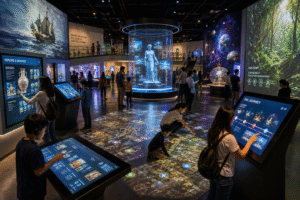
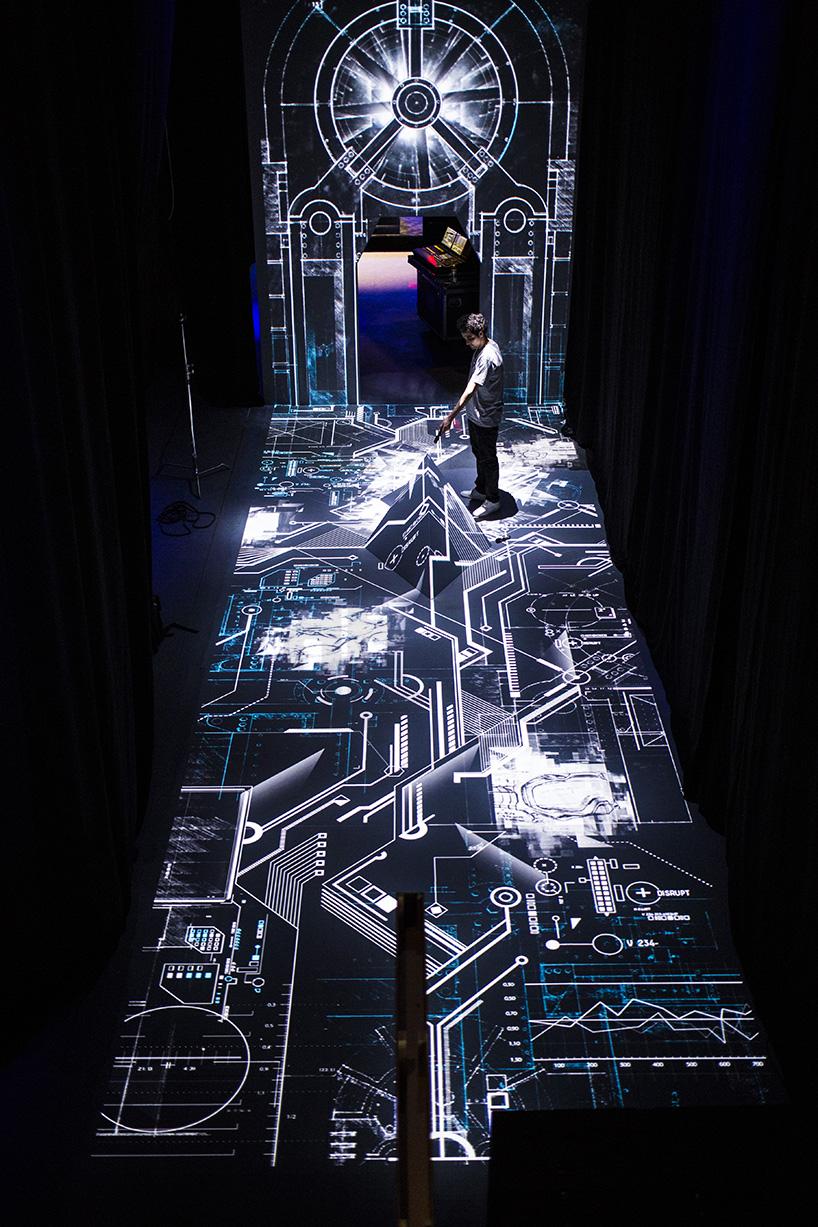
Atmospheric technology is the primary tool through which a narrative maze transforms a physical space into a convincing and emotionally resonant story world. Projection mapping and programmable lighting are the two most impactful technologies available for this purpose, and their effective integration requires careful specification and creative direction. Projection mapping allows surfaces within the maze to carry dynamic story content: character appearances, environmental transformations, countdown sequences, and narrative revelations that respond to visitor progress and choices. Programmable lighting creates emotional tone, signals state changes within the story, guides visitor movement, and creates the sensory differentiation between zones that communicates distinct story environments without requiring complete physical reconstruction.
Timed Entry and Throughput Optimisation
Managing the tension between immersion and throughput is one of the most challenging operational problems in narrative maze design. A truly immersive experience requires visitors to feel that they are genuinely alone within the story world. But the commercial imperative of a public attraction demands that multiple groups move through the space simultaneously. Resolving this tension requires sophisticated timed entry management, staggered starting positions across multiple maze entry points, pathway design that creates natural spatial separation between concurrent groups, and operational protocols that can dynamically adjust group spacing based on real-time throughput data.
Actor Integration and Digital Character Guides
Live actor integration is one of the most powerful tools available for elevating a narrative maze experience from impressive to genuinely unforgettable. A skilled actor embedded within the maze environment as a story character can provide contextual narrative guidance, create moments of genuine surprise and emotional connection, adapt to individual visitor groups in ways that no pre-programmed system can replicate, and serve as a quality assurance mechanism by monitoring visitor engagement and intervening when groups become confused or disengaged. For venues where ongoing actor costs represent a significant operational challenge, digital character guides delivered through strategically placed screens, audio installations, or AR interfaces can provide a consistent narrative presence that supplements or partially substitutes for live performance.
Story-Tied Merchandise
Merchandise design for a narrative maze attraction is most effective when it is deeply integrated with the story world rather than generic venue branding. Visitors who have genuinely invested in a story world and its characters want to carry something of that world home with them. Character-specific collectibles, in-world artefacts, mission debrief packs, and story expansion content represent the highest-converting merchandise categories and generate margin that significantly improves the total revenue per visitor.
INVESTMENT ADVANTAGE | Unlike ride-based attractions, narrative maze experiences require lower mechanical capital expenditure and carry more flexible maintenance obligations. The primary investment is in content, atmosphere, and story design, all of which can be updated and expanded without the long lead times and regulatory burden associated with mechanical attraction refurbishment. |
Revenue and Monetisation Strategy
The revenue architecture of a narrative maze attraction is one of its most compelling investment characteristics. Unlike single-format attractions with a single revenue stream, a well-structured narrative maze generates income across multiple channels, many of which compound each other. The following table summarises the primary revenue streams available to a narrative maze operator and their commercial characteristics.
Revenue Stream | Format | Revenue Type |
Ticketed General Entry | Standard and peak pricing tiers | Primary, recurring |
Premium Storyline Upgrades | Add-on narrative packs per visit | Upsell, per visit |
Multi-Ending Replay Passes | Discounted return visit bundles | Repeat visitation driver |
Birthday and Celebration Packages | Private group hire with F&B and extras | Premium, pre-booked |
Corporate Team-Building Events | Exclusive session hire with facilitation | High-value B2B |
Seasonal Story Expansions | Limited-time narrative overlays | Demand surge, media driver |
Themed Retail and Merchandise | Story-character goods, collectibles | Ancillary, margin-positive |
Digital and Hybrid Extensions | App-based content, take-home narrative kits | Subscription and recurring |
Ticketed General Entry and Tiered Pricing
Base ticket revenue is the foundation of the commercial model and should be structured to reflect the premium nature of the experience. Tiered pricing across standard, peak, and shoulder periods maximises revenue per available slot while maintaining accessibility for price-sensitive visitor segments. Early booking discounts and advance purchase incentives improve cash flow predictability and reduce the operational cost of managing walk-up demand. Group pricing structures for families and school groups should be set to encourage volume while protecting per-head yield.
Premium Upgrades and Replay Passes
The narrative structure of the maze is itself a commercial asset. Premium storyline upgrade packages, which unlock additional narrative content, extended zones, or exclusive character interactions, allow the venue to capture additional spend from visitors who are already highly engaged with the story world and motivated to experience more of it. Multi-ending replay passes, offered at a discounted rate relative to full admission, directly convert the natural replay motivation created by branching story paths into incremental revenue. These passes are most effective when sold at the point of exit, when visitor engagement with the story world is at its peak.
Corporate and Group Events
Corporate team-building and group events represent one of the highest-value revenue streams in the narrative maze model, combining premium session hire fees with facilitated programming, food and beverage packages, and customised story briefings. The structured challenge environment of a narrative maze is ideally suited to corporate team-building objectives, providing natural opportunities for leadership observation, collaborative problem-solving under time pressure, and shared achievement experiences that generate genuine team cohesion. Venues should invest in a dedicated group sales capability and a corporate event product suite from the earliest stages of operation.
Seasonal Story Expansions
Seasonal narrative expansions are one of the most commercially powerful tools available to a narrative maze operator. A Halloween story overlay, a winter mystery arc, or a summer adventure expansion can be introduced without full reconstruction of the physical environment, using the modular scenic design and programmable atmospheric technology already in place. These expansions drive demand surges, generate media coverage, create urgency for return visits among existing audiences, and attract new visitor segments who may not have engaged with the base experience.
Global Benchmarks: Three Attractions Redefining the Standard
The interactive narrative maze sector has produced a remarkable set of precedents over the past decade, each approaching the core format from a distinct creative and commercial angle. The following three attractions represent the global state of the art and offer direct lessons for any developer planning a new venue in this space.
01 | Meow Wolf Santa Fe, New Mexico, USA Meow Wolf is the defining reference point for multi-room immersive storytelling in the United States and one of the most influential entertainment concepts of the past decade. Its flagship House of Eternal Return installation occupies a converted bowling alley and immerses visitors in a fully realised narrative mystery world built across dozens of interconnected rooms, each designed by a different artist but unified within a coherent and surprisingly deep story architecture. What makes Meow Wolf particularly instructive for developers is the depth and sophistication of its discovery-based design. The narrative is not delivered through signage or guided narration but through environmental storytelling: hidden documents, interactive objects, layered visual clues, and spatial secrets that reward curiosity and sustained exploration. This approach creates a genuinely different experience for every visitor and on every visit, driving a repeat visitation rate that is exceptional by the standards of any entertainment attraction. Meow Wolf has since expanded to Denver, Las Vegas, and Grapevine, demonstrating the scalability of the model across diverse markets. |
02 | The Crystal Maze LIVE Experience London, United Kingdom The Crystal Maze LIVE Experience is a masterclass in translating a beloved intellectual property into a commercially robust live entertainment format. Based on the long-running UK television game show, the attraction combines physical maze navigation with timed narrative challenges across four distinctly designed themed zones: Aztec, Medieval, Industrial, and Ocean. Groups of up to sixteen participants are guided through the experience by a live Maze Master character who provides narration, manages timing, and delivers the theatrical energy that makes the experience feel genuinely cinematic. The attraction has become one of the highest-rated entertainment experiences in London and consistently generates strong corporate group bookings, which account for a significant proportion of total revenue and support a premium per-head yield well above the market average for walkthrough attractions. Its success demonstrates the commercial power of combining strong brand recognition, live performance, and structured challenge mechanics within a maze environment. |
03 | Dismaland Weston-super-Mare, Somerset, UK Dismaland occupies a unique position in the landscape of narrative maze precedents as an example of how the immersive walkthrough format can be deployed in a radically unconventional register. Created by artist Banksy in 2015 as a self-described bemusement park, the installation occupied a derelict lido building and offered a five-week limited-run experience that combined maze-like spatial navigation with darkly humorous social commentary, interactive art installations, and deliberately subverted entertainment conventions. Dismaland generated extraordinary international media coverage, sold out its entire run within hours of tickets going on sale, and demonstrated with unusual clarity that the narrative maze format is not constrained to any single genre, tone, or demographic target. Its relevance to commercial developers lies in the lessons it offers about scarcity, viral design, and the commercial value of a sharply differentiated creative position. An attraction that gives people something genuinely new to talk about generates media and social reach that no conventional marketing budget can replicate. |
Operational Strategy and Scalability
The long-term commercial success of a narrative maze attraction depends on the quality of its operational design as much as on the brilliance of its creative concept. Many immersive attractions that launch with strong critical reception and initial attendance fail to sustain performance because their operational model is not designed for the realities of high-throughput public operation, ongoing content refresh, and the management of a complex live entertainment environment at scale.
Scalability Through Modular Design and Evolving Story Arcs
Scalability in a narrative maze context means the ability to grow revenue and visitor engagement over time without proportional growth in capital expenditure. This is achieved through two complementary mechanisms. The first is modular physical design, which allows the venue to reconfigure, extend, or refresh its scenic environment without major construction programmes. The second is an evolving story architecture that introduces new narrative content, new characters, new challenges, and new endings on a planned seasonal schedule, giving the existing audience compelling reasons to return and giving new audiences a constantly refreshed reason to visit for the first time.
A well-managed narrative maze should plan for at least two significant story refreshes per calendar year, timed to align with major demand periods such as school holidays, Halloween, and the Christmas and New Year season. Each refresh should introduce enough new content to constitute a meaningfully different experience for returning visitors while maintaining the story world continuity that makes the narrative investment of first-time visitors feel durable and respected.
Key Performance Indicators
Operational sustainability in a narrative maze attraction requires disciplined monitoring of a clearly defined set of key performance indicators. The following KPI framework represents the metrics that matter most for understanding and improving the financial and experiential performance of the venue over time.
KPI | What It Measures | Target Benchmark |
Throughput per Hour | Number of visitors completing the maze per hour | 200 to 350 visitors per hour |
Average Spend per Visitor | Ticket revenue plus in-venue and retail spend | 1.8 to 2.5x base ticket price |
Repeat Visitation Rate | Percentage of visitors returning within 12 months | 25 to 40 per cent annually |
Group Booking Share | Proportion of revenue from corporate and group packages | 30 to 45 per cent of total revenue |
Story Completion Rate | Percentage of visitors reaching a defined story ending | 75 per cent or above |
Dwell Time | Average total time spent within the venue | 60 to 90 minutes per visit |
Staff Training and Live Performance Management
The human element of a narrative maze operation is frequently the variable that most significantly differentiates a good visitor experience from a great one. Actor training, briefing protocols, in-maze communication systems, and performance quality management must all be treated as core operational disciplines rather than secondary concerns. Venues that invest in the ongoing development of their live performance team and maintain rigorous quality standards across every session consistently outperform those that treat staffing as a cost to be minimised.
Technology Maintenance and Content Management
The atmospheric and interactive technology systems that underpin a narrative maze experience require systematic maintenance and a clearly structured content management protocol. Projection systems, RFID readers, programmed lighting rigs, audio installations, and visitor-facing digital interfaces all require regular servicing, software updates, and component replacement schedules. Venues should budget a minimum of 8 to 12 per cent of annual technology investment for ongoing maintenance and content refresh, and should negotiate content management system access with all technology vendors as a non-negotiable contractual requirement.
Why Partner with Peach Prime Consultancy
Launching a successful interactive narrative maze attraction requires specialist expertise that spans creative concepting, technical specification, commercial modelling, and operational design. The decisions made in the earliest stages of development, about story architecture, technology selection, spatial flow, and revenue structure, have compounding effects on the long-term performance of the venue. Getting these decisions right the first time is enormously more cost-effective than correcting them after the venue has opened.
Peach Prime Consultancy specialises in immersive attraction planning, story-based environment design, and revenue modelling for the edutainment and experiential entertainment sector. Our team brings deep practical expertise across the full development lifecycle, from initial concept scripting and thematic development through to technology integration, vendor coordination, and operational structuring for launch and beyond.
We help investors transform narrative maze concepts into scalable, commercially viable entertainment destinations. Our structured planning methodology ensures that every decision about story, space, technology, and programme is made with a clear understanding of its implications for visitor experience, operational efficiency, and financial return.
WHAT PEACH PRIME DELIVERS | Narrative concept development and story architecture design, attraction master planning and spatial flow strategy, technology specification and vendor selection, commercial feasibility modelling and revenue structure design, programming and operational launch support, and ongoing performance optimisation consulting. |
If you are ready to explore the investment potential of an interactive narrative maze attraction in your market, Peach Prime Consultancy is the partner you need to take the concept from vision to reality with confidence and precision. Visit www.peachprime.in to learn more or contact our team to arrange your strategic planning consultation.