Peach Prime Consultancy provides water park design and planning services for investors, resort developers, hospitality groups, and government bodies planning greenfield water parks or expanding existing aquatic leisure facilities. We cover the full scope of water park consultancy from feasibility assessment and zone concept development through to theming, water filtration and treatment planning, technology integration, sustainable operations design, and execution advisory.
A water park is one of the most technically demanding entertainment destination typologies to plan and execute. Beyond the creative and spatial challenges common to all leisure destinations, water parks require the simultaneous management of water engineering, hydraulic system design, health and hygiene compliance, ride safety certification, lifeguard deployment planning, and climate-sensitive operational scheduling. Peach Prime brings specialist knowledge of all these dimensions to every water park project, ensuring the destination is designed to be safe, commercially viable, and operationally efficient from its first season of operation.
What Does Water Park Design and Planning Involve?
Water park design consultancy is the professional service of planning, designing, and specifying a water park from concept through to construction-ready documentation. It covers zone concept and theming development, water ride and attraction selection and layout, hydraulic and water filtration system planning, visitor flow design, F&B and amenity planning, technology integration for operational management, sustainable water and energy use planning, and the production of design and specification documents required to appoint civil contractors, water ride manufacturers, MEP engineers, and health authority approvers.
Water parks differ from other entertainment destination types in that the physical infrastructure is inseparable from the attraction experience. The water itself, its temperature, clarity, pressure, and movement, is the medium through which the visitor experience is delivered. A water park with inadequate water treatment will face health authority closures regardless of how well designed its slides and attractions are. A water park with an undersized filtration system will struggle to maintain water quality at peak visitor loads. A water park with poorly designed drainage will create slip hazards and visitor dissatisfaction even on days when the attractions are operating correctly.
Peach Prime approaches water park design with water engineering and visitor experience as equal and interdependent priorities. Creative theming and attraction selection are developed in parallel with hydraulic system planning and operational modelling, ensuring the finished park is both compelling to visit and technically sound to operate.
Our Water Park Design Services
Peach Prime delivers water park design across five integrated service areas, covering both the experiential design and the technical infrastructure planning that water parks require.
Theming of Zones | We develop the thematic concept and visual character for each zone of the water park. Zone theming defines the narrative world of the park, the architectural and landscape character of each area, the colour palette and material palette, the decorative and immersive elements that bring the theme to life, and the atmospheric identity that distinguishes each zone from adjacent areas. Strong zone theming transforms a water park from a collection of slides into a destination visitors want to return to. |
Water Filtration System Planning | We plan the water filtration and treatment system for the water park, specifying the filtration technology, treatment chemical systems, recirculation rates, turnover periods for each water body, and the monitoring and control infrastructure. Water filtration planning is one of the most technically critical components of a water park because inadequate filtration is the leading cause of health authority compliance failures, temporary closures, and reputational damage in water park operations globally. |
Sustainable Operations | We design the sustainable operations framework for the water park, covering water conservation measures including recirculation and evaporation loss management, energy-efficient pump and filtration system selection, solar energy integration options, chemical use reduction strategies, and waste management planning. Sustainable operations planning reduces the long-term operating cost of the water park and reduces the environmental impact of a destination category that is inherently water and energy intensive. |
Technology Integration | We specify and plan the technology systems that support water park operations, including cashless payment and wristband access management systems, locker management technology, queue management and virtual queuing platforms, CCTV and lifeguard monitoring systems, water quality real-time monitoring and alerting platforms, and guest-facing mobile applications. Technology integration improves the visitor experience, reduces operational labour costs, and provides management with the data needed to optimise park performance. |
Operational Efficiency | We develop the operational efficiency framework for the water park, covering staffing structure and lifeguard deployment ratios, activity and ride scheduling, F&B outlet management at varying occupancy levels, maintenance scheduling for water attractions and filtration systems, seasonal opening and closing procedures, and emergency response protocols. An operational efficiency plan ensures the water park can be operated safely and profitably across its full range of visitor volumes from low-season weekdays to peak weekend capacity. |
How Peach Prime Plans and Designs a Water Park
Our water park design process follows six structured phases that integrate creative, technical, and operational planning from the earliest stage. Each phase has defined deliverables and client approval gates before proceeding.
Phase | What We Deliver |
Phase 1 Feasibility and Market Assessment | We assess the proposed site and market for water park development, evaluating catchment population and demographics, climate and seasonal operating window, competitive landscape, land area and topography, utility access, and regulatory environment. We produce a feasibility report with visitor projections, capital expenditure estimates, operating cost modelling, and financial return analysis. The feasibility phase establishes the viable scale and concept for the water park before any design investment is made. |
Phase 2 Zone Concept and Attraction Mix | We develop the zone structure and attraction mix for the water park. Zone concept work defines the number and character of themed areas, the attraction hierarchy from anchor slides to leisure pools and children’s zones, and the guest experience journey through the park. Attraction mix recommendation covers water slides, wave pools, lazy rivers, children’s water play areas, activity pools, and adult relaxation zones, with capacity analysis confirming the mix can manage projected visitor volumes at peak occupancy. |
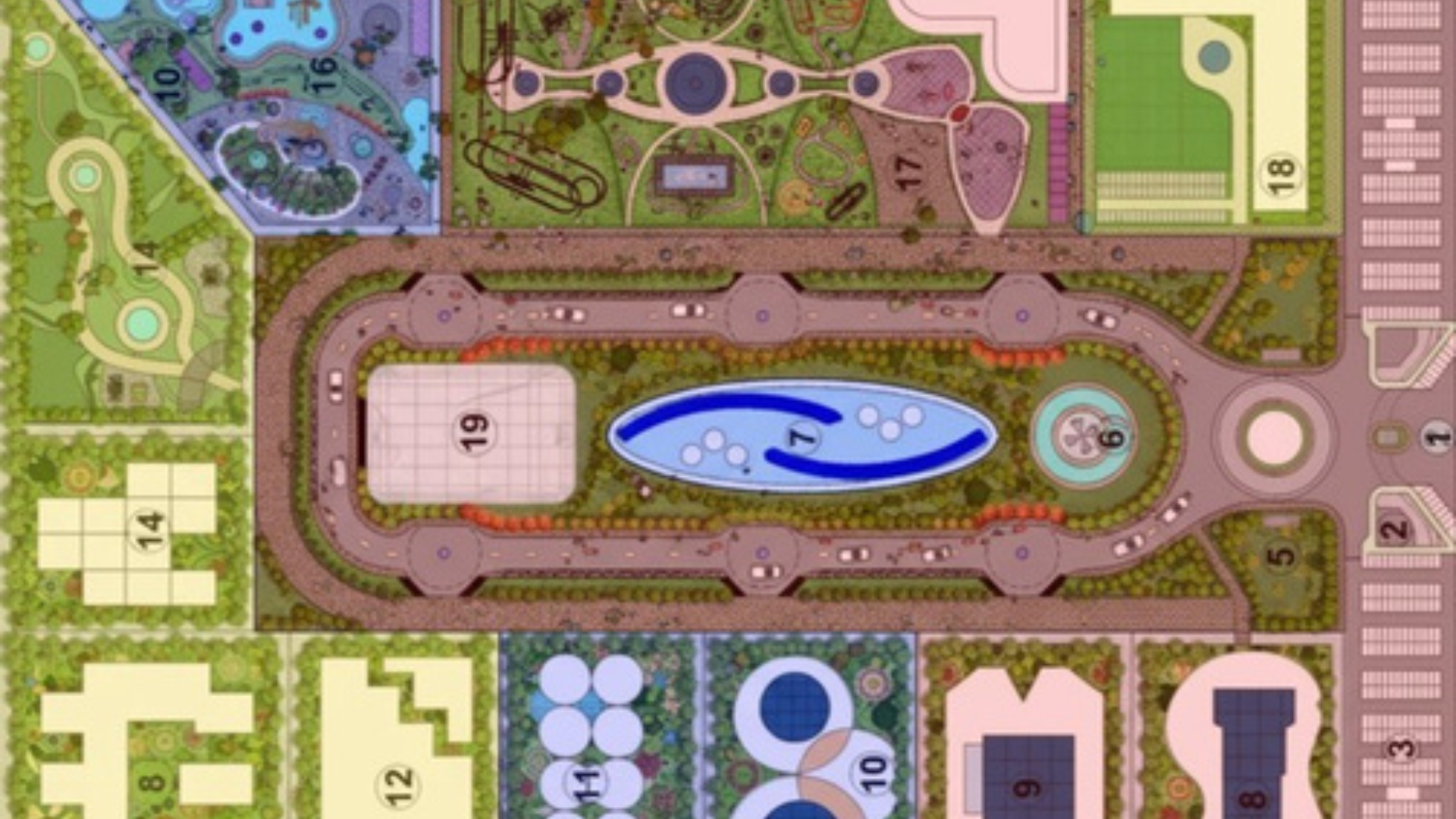
Phase 3 Master Planning and Visitor Flow | We produce the water park master plan, positioning all attraction zones, pools, changing facilities, F&B outlets, retail, first aid, back-of-house infrastructure, car parking, and plant rooms within the site. Visitor flow is modelled to minimise congestion at peak times, ensure safe separation of different visitor age groups and activity types, and optimise the placement of F&B and retail to maximise secondary revenue capture. |
Phase 4 Water Engineering and Filtration Planning | We develop the water engineering brief covering all water bodies in the park, specifying hydraulic requirements, recirculation rates, turnover periods, filtration technology, chemical treatment systems, water temperature management, and pump and pipe infrastructure sizing. This phase produces the MEP engineering brief issued to the appointed hydraulic and water treatment engineer for detailed design. |
Phase 5 Theming, Technology, and Operational Design | We produce the detailed theming specification for all zones, the technology systems integration plan, and the operational framework document. Theming specifications are used to brief themed environment fabricators. The technology plan is used to procure access management, queue management, and monitoring systems. The operational framework defines staffing structure, safety protocols, and maintenance scheduling. |
Phase 6 Tender Support and Execution Advisory | We prepare tender documentation for civil works, water ride supply and installation, filtration system installation, theming fabrication, and technology systems. We support client bid evaluation, contractor appointments, and design intent management during construction. Pre-opening reviews confirm the water park meets safety certification, health authority, and operational readiness requirements before opening to guests. |
Types of Water Park Projects We Work On
- Standalone outdoor water parks on dedicated sites designed as destination leisure attractions
- Resort-integrated water parks developed as the primary leisure amenity within a hospitality and accommodation destination
- Indoor water parks within climate-controlled structures enabling year-round operation in any climate
- Urban water leisure centres combining water park attractions with wellness, fitness, and spa components
- Children’s water play parks focused on splash pads, zero-depth entry areas, and age-appropriate water play for younger visitors
- Water park expansions adding new zones, attractions, or upgraded filtration systems to existing operating facilities
- Water zones within larger theme parks or integrated leisure destinations as a component of a broader attraction mix
- Rain dance and event water facilities for seasonal activation within resorts, festivals, or corporate venues
Why Choose Peach Prime Consultancy for Water Park Design?
Technical and creative expertise in one engagement: Most creative design agencies do not have water engineering knowledge, and most MEP engineers do not have entertainment design experience. Peach Prime bridges both disciplines in a single engagement, producing a design that is both experientially compelling and technically sound. This prevents the expensive misalignments that arise when creative design and technical engineering are managed as separate workstreams.
Filtration and health compliance from day one: Water quality and health authority compliance are not engineering afterthoughts in our design process. Filtration system planning, water turnover rates, and chemical treatment specifications are developed in parallel with the creative and spatial design, ensuring the finished park meets all applicable health and safety standards without requiring expensive retrofitting of undersized treatment infrastructure.
Climate-calibrated seasonal operations planning: A water park’s financial model is fundamentally shaped by the number of operating days per year, which is determined by the local climate and seasonal pattern. Peach Prime designs water park operational frameworks that maximise the number of viable operating days through covered zones, heated pools, and operational scheduling strategies calibrated to the specific climate of the project location.
Sustainable operations as a cost reduction strategy: Water and energy costs are the two largest operating cost categories in a water park after staffing. Peach Prime designs water conservation and energy efficiency measures into the park infrastructure from the beginning, reducing the operating cost base and improving long-term financial performance rather than treating sustainability as a branding exercise.
Frequently Asked Questions: Water Park Design and Planning
Q1. How much does it cost to build a water park in India?
Small water parks (3–5 acres) typically cost ₹7–15 crore; mid-size parks (8–15 acres) ₹30–50 crore; large destination water parks ₹50+ crore. Slides and wave equipment, civil works, and filtration are the major cost heads.
Q2. How long does it take to design and build a water park?
Typically 12–24 months: 1–2 months feasibility, 2–4 months design and engineering, 10–12 months construction and slide installation, plus commissioning before season launch.
Q3. What water filtration system does a water park need?
Commercial water parks require high-rate sand or regenerative media filtration with automated chlorine/UV/ozone disinfection, achieving full pool turnover every 1–6 hours depending on the attraction. Filtration design directly determines hygiene compliance, water costs, and guest safety.
Q4. How is water park theming done?
Through themed slide towers, artificial rockwork (GRC), wave pool backdrops, themed entry portals, and storyline zones – executed in FRP, GRC, and weather-proof finishes. Strong theming lifts ticket prices 20–40% versus untheme parks with identical rides.
Q5. How much water does a water park consume?
Modern parks are designed for minimal make-up water – 3–5% daily replacement through filtration, backwash recovery systems, and rain-water harvesting. Sustainable operations design cuts water and energy costs 25–40% versus older parks.
Q6. What slides and attractions should a water park include?
A balanced mix: a wave pool and lazy river as family anchors, 4–8 body/tube slides across thrill levels, a kids’ aqua play structure with tipping bucket, and one signature attraction (funnel, water coaster, or rainbow rain-dance zone) for marketing identity.
Q7. Is a water park a good investment in India?
Water parks in India typically achieve payback in 3–5 years with strong summer/weekend peaks. Success factors are catchment size, season length, F&B/locker/costume revenue design, and disciplined maintenance – all validated in a feasibility study first.