Peach Prime Consultancy is a specialist amusement park design company that plans and delivers ride led entertainment destinations for investors, developers, government bodies, and hospitality groups. As an independent amusement park consultant, we work for the investor rather than for any ride manufacturer, so every decision on the ride mix, the master plan, the theme, and the budget is made in your commercial interest.
We work with clients across India and on amusement park projects across Asia, the Middle East, and other global markets. Our involvement runs across the full project lifecycle, from the first feasibility study through master planning, ride selection, theming, and the park management systems that run the operation. This continuity keeps the financial plan and the physical park aligned, and it reduces the need to coordinate many separate vendors across the long programme an amusement park requires.
What Is Amusement Park Design and Consultancy?
Amusement park design and consultancy is the process of turning land and capital into a safe, profitable, and enjoyable ride led destination. It blends commercial planning, engineering, and creative design. The commercial side tests whether the park will work and at what scale. The planning side organises the site into zones and guest flows. The creative side shapes the theme and the experience. The technical side selects the rides and the systems that run them.
Because an amusement park is one of the most capital intensive leisure projects, the order of these decisions matters. Feasibility comes first, then the master plan, then the ride and theming choices that fill it, then the operating systems. Getting that sequence right is what protects the investment and the timeline.
Amusement Park or Theme Park: What Is the Difference?
The two terms are often used together, but they describe a difference of emphasis that affects cost, land, and design. Understanding it helps you choose the right model for your site.
| | Amusement park | Theme park |
|---|
Built around | A variety of rides and attractions | A story, theme, or set of themed worlds |
Leads with | The rides themselves | Immersion and storytelling |
Theming | Present but lighter | Central and elaborate |
Investment | Moderate to high | High to very high |
Most successful parks sit somewhere on this spectrum, and a strong amusement park still uses theming to lift the experience. Peach Prime designs both formats, and our existing Theme Parks service covers the story led end of the spectrum. This page focuses on the ride led amusement park.
Types of Amusement Parks We Design
- Regional and family parks. Compact, ride led parks serving a local catchment, often with a focused family and kids mix.
- Large destination parks. Multi zone parks with signature coasters, shows, and a full day of attractions.
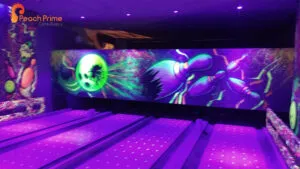
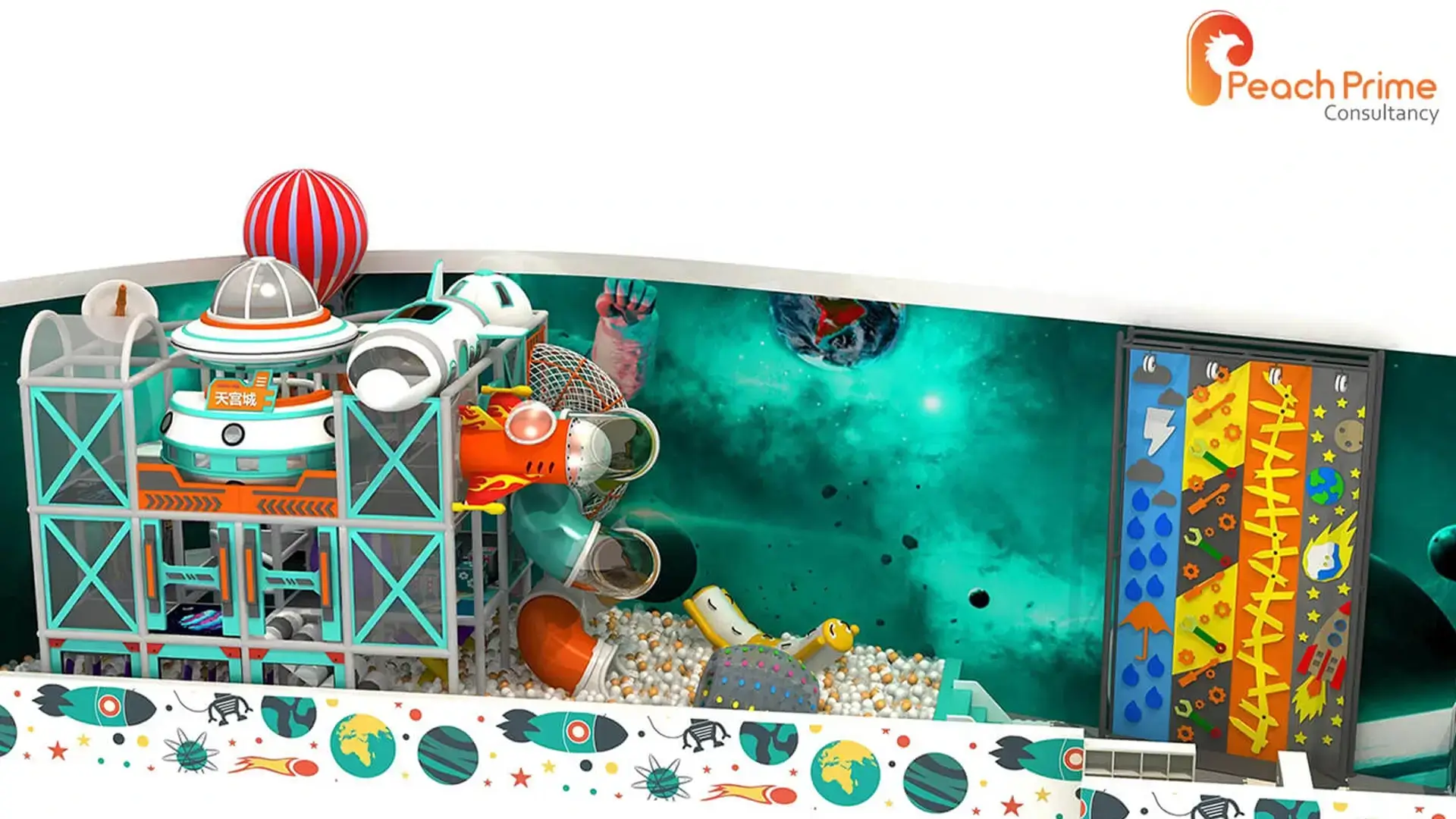
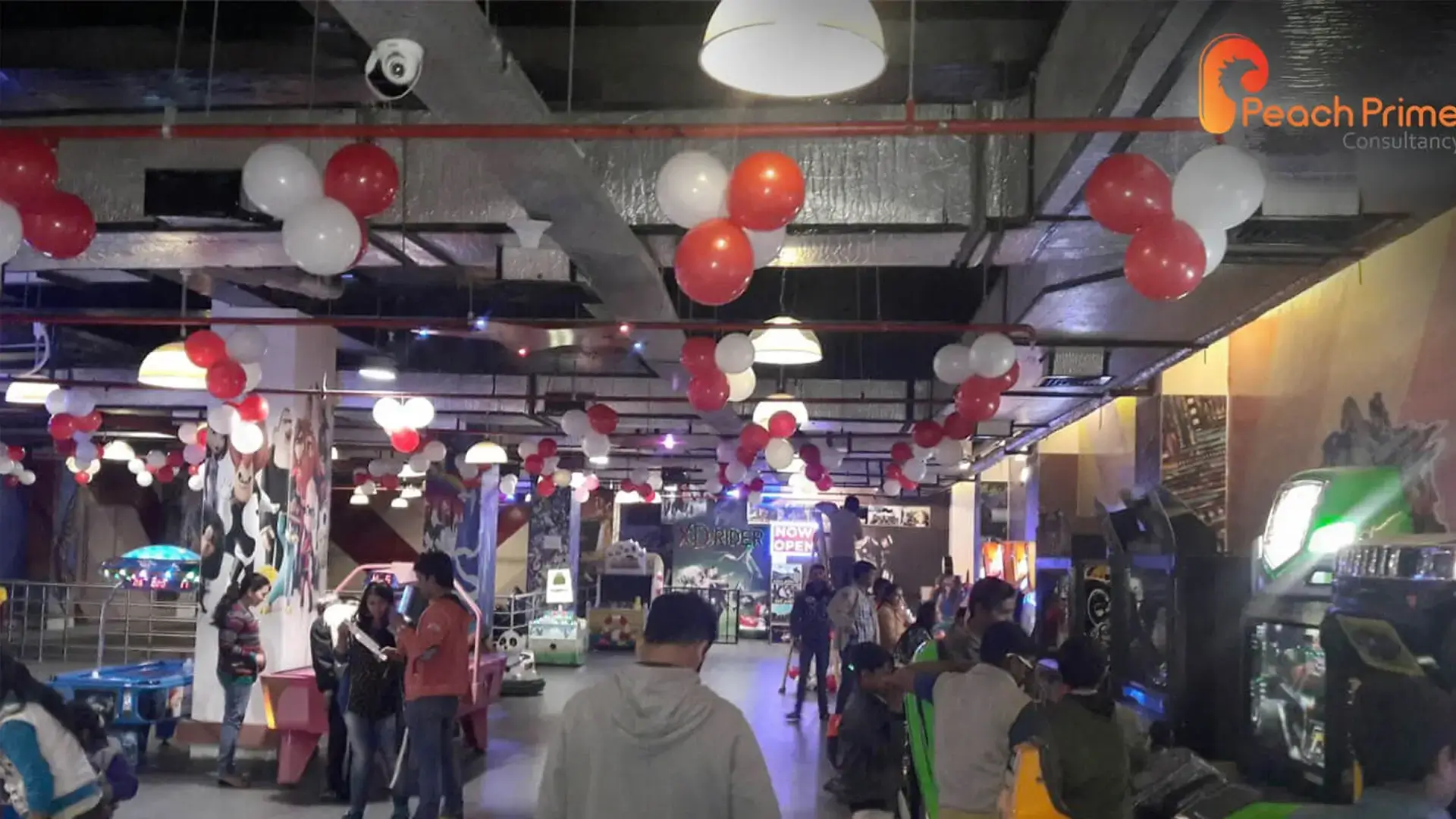
- Indoor amusement parks. Climate controlled, ride led venues, often inside a mall or a larger development.
- Hybrid and mixed leisure parks. Amusement parks combined with water park, adventure, or resort components.
Our Amusement Park Services
Each stage below can be engaged on its own or as part of a complete amusement park engagement. The stages connect, so the feasibility shapes the master plan, the master plan shapes the ride and theming choices, and the operating systems are planned into the design rather than added at the end.
We assess the catchment, project the footfall and revenue, and model the capital and operating costs so you can decide on evidence rather than optimism. The output is an investor ready feasibility study or a detailed project report for tenders, covering ROI, break even, and payback.
We translate the brief into a spatial plan, with zoning, guest flow, capacity, infrastructure, and phasing. The master plan is the framework every later decision follows, and it is the document set used to appoint architects and engineers.
We build a balanced ride mix matched to the audience, the space, and the budget, then help specify and procure rides from vetted manufacturers. Because we are independent, the selection is driven by the right mix and reliable suppliers rather than a single catalogue.
We develop the theme, the zone narratives, and the atmosphere that lift a collection of rides into a memorable destination. Theming increases dwell time, shareability, and the ability to charge for a premium experience.
We advise on the ticketing, access control, cashless, and operations systems that run the park, helping you specify, evaluate, and integrate the right platform. We are independent of any software vendor, so the recommendation fits your operation rather than a sales pitch.
Amusement Park Ride Categories
The ride mix is the heart of an amusement park. A strong mix balances headline thrill rides that create the draw with high capacity family rides that carry the crowds and earn steadily. The table below sets out the main categories and the role each plays.
Ride category | Examples | Role in the park |
|---|
Roller coasters | Steel, family, and mini coasters | Headline thrill draw and signature attraction |
Thrill rides | Drop towers, pendulums, gyro swings | High adrenaline and strong social media appeal |
Family rides | Ferris wheel, carousel, pirate ship, bumper cars | Broad appeal, high capacity, core revenue |
Children’s rides | Kiddie trains, mini carousels, kiddie cars | Young children and parents |
Water rides | Log flume, river rapids, splash boats | Seasonal draw and cooling appeal |
Dark rides | Themed track and interactive shooting rides | Weatherproof, story led, and repeatable |
Observation and transport | Giant wheel, monorail, sightseeing train | Landmark, gentle, all age attractions |
Why Invest in an Amusement Park in India
India has a young, growing population and rising disposable income, and demand for organised family leisure continues to grow across metros and Tier 2 cities. Amusement parks anchor that demand as full day destinations that draw families, groups, schools, and tourists, and they support surrounding hospitality, retail, and real estate. For government and civic clients, a well planned park also serves as public leisure infrastructure and a regional draw.
An amusement park is a long term asset. The investment is large and the build is lengthy, but a well located, well designed park earns across many revenue streams for decades. The risk sits at the planning stage, which is exactly why feasibility and master planning deserve the most care.
Amusement Park Cost in India
There is no single build cost, because it depends on the land, the scale, and the ride mix. As a guide, rides and land are usually the largest parts of the budget. The table below shows an indicative split for a typical amusement park. These figures are directional, the land share in particular varies enormously by location, and they should be confirmed against a feasibility study for your site.
Cost component | Indicative share | What it covers |
|---|
Land and site development | 15 to 30 percent | Land cost, levelling, access roads, and parking |
Rides and attractions | 30 to 45 percent | Coasters, thrill, family, kids, water, and dark rides |
Civil works and infrastructure | 12 to 20 percent | Foundations, buildings, paths, and structures |
Theming and landscaping | 8 to 15 percent | Themed zones, landscaping, and atmosphere |
Utilities, services, and safety systems | 5 to 10 percent | Power, water, drainage, and safety systems |
Pre opening, working capital, and contingency | 8 to 12 percent | Staffing, marketing, and a buffer for overruns |
A small regional park can be developed for a few crores, while a large destination park runs into many tens of crores or more. The purpose of a feasibility study is to size this investment against the catchment and the expected returns.
How Much Land Does an Amusement Park Need?
Land requirements follow the ride mix, the visitor numbers, and the room you want for future phases. The table below gives indicative bands by park type.
Park type | Indicative land or area | Notes |
|---|
Regional or family park | 2 to 5 acres | A focused set of family and kids rides |
Mid size amusement park | 5 to 15 acres | A fuller ride mix with F&B and retail |
Large destination park | 15 to 50 acres and above | Multiple zones, signature coasters, and shows |
Indoor amusement park | 20,000 sq ft and above | Climate controlled, often inside a mall or building |
What Makes an Amusement Park Profitable?
Profit in an amusement park comes from filling many revenue streams across a long visit, not from ticket sales alone. The gate brings people in, and the rides, food, retail, premium experiences, and events convert the visit into spend. A strong park is designed so guests stay longer and spend across the day.
Revenue stream | How it earns |
|---|
Entry tickets and day passes | Gate admission, the core income of most parks |
Ride and attraction access | Pay per ride or all inclusive wristbands |
Food and beverage | Restaurants, kiosks, and themed dining |
Retail and merchandise | Souvenirs, branded goods, and gifts |
Premium experiences | Fast track, cabanas, and VIP packages |
Group and corporate bookings | Schools, groups, and corporate days |
Events and seasonal programming | Festivals, shows, and seasonal events |
Sponsorship and advertising | Brand partnerships and on site advertising |
Our Amusement Park Development Process
Peach Prime follows a staged process so that commercial reality and creative ambition stay aligned across the long programme an amusement park requires.
- Feasibility and business planning. We test the catchment, the costs, and the returns, and produce a feasibility study or DPR.
- Concept and master planning. We define the zones, guest flow, capacity, and phasing that frame the whole park.
- Ride selection. We build the ride mix and specify and procure rides from vetted manufacturers.
- Theming and detailed design. We develop the theme, the zones, and the detailed design of attractions and spaces.
- Systems and technology. We specify and integrate the ticketing, access, and management systems.
- Tender support and execution advisory. We support vendor selection, and review the build against the design through to opening.
Common Mistakes We Help You Avoid
- Committing capital without feasibility. The largest costs are hard to reverse, so untested assumptions are dangerous.
- An unbalanced ride mix. Too many thrill rides narrows the audience and the capacity, too few weakens the draw.
- Designing without phasing. A plan with no room to grow caps the park before it opens.
- Leaving systems until late. Ticketing and access designed in at the end create operational gaps and rework.
- Underrating theming and flow. Weak atmosphere and poor circulation shorten visits and reduce spend.
Why Choose Peach Prime as Your Amusement Park Consultant
- Independent advice. We are not tied to any ride or software brand, so recommendations are made for your returns.
- Full lifecycle delivery. One team carries the project from feasibility through to opening, which removes the gaps between separate vendors.
- Commercial discipline. Every decision is tested against footfall, capacity, and return on investment.
- Government and private experience. We prepare DPRs for public tenders and business plans for private investors.
- Proven across markets. We plan entertainment destinations for clients in India and worldwide.
Who We Work With
Peach Prime works with a wide range of clients developing amusement parks and leisure destinations, including:
- Private investors and developers planning new ride led parks
- Government bodies and municipal corporations developing public leisure parks
- Hospitality groups and resort developers adding amusement components
- Real estate and mixed use developments anchoring a leisure attraction
- Operators expanding or redeveloping an existing park
Global and Asia Reach
Peach Prime is headquartered in Vadodara, India, and our amusement park design work extends across India and into Asia, the Middle East, and other global markets. We support international clients through a blend of remote planning and on site engagement, and we adapt every project to local visitor preferences, climate, regulations, and budgets while holding to the same structured process. Whether the park is planned for an Indian metro, a Tier 2 city, or a development overseas, the method and the rigour stay the same.
Frequently Asked Questions
Q1. What is the difference between a theme park and an amusement park?
An amusement park is a collection of rides and attractions; a theme park organizes those attractions inside immersive storylines and themed environments. Theming increases cost 15–30% but typically delivers higher ticket prices, longer stays, and stronger brand loyalty.
Q2. How much investment is needed for an amusement park in India?
Small amusement parks start around ₹10–30 crore, mid-size parks ₹30–100 crore, and large parks ₹100+ crore, driven mainly by ride imports, land development, and infrastructure.
Q3. How do you select rides for an amusement park?
By matching ride mix to catchment demographics – the standard balanced portfolio is roughly 40% family rides, 30% kids’ rides, 20% thrill rides, and 10% water/interactive attractions, adjusted by market data from the feasibility study.
Q4. Which safety standards apply to amusement parks in India?
Indian parks follow IS 15475 and increasingly adopt international standards – ASTM F24 (USA) and EN 13814 (Europe). Annual third-party inspections, daily operational checks, and documented maintenance systems are now expected by insurers and authorities.
Q5. What is a park management system?
An integrated technology platform covering RFID/cashless ticketing, access control, ride queue management, F&B POS, CRM, and analytics. Modern parks are designed “cashless-first,” which increases in-park spending by 15–25% and gives operators real-time business data.
Q6. Can an existing amusement park be renovated instead of rebuilt?
Yes – park refurbishment (re-theming, ride refresh cycles, new F&B and event zones) typically costs 20–40% of a new build and can lift attendance 30–60% when guided by a professional revamp master plan.
Talk to Peach Prime
Talk to Peach Prime Consultancy about your land, your budget, and your ambition for the park. We will tell you honestly whether the opportunity stacks up, and if it does, we will design an amusement park built to draw crowds and earn for decades. Contact us through the website, by email at info@peachprime.in, or on WhatsApp at the number listed on the site.