Peach Prime Consultancy is an amusement park design company that turns a concept and a feasibility study into a master plan for the whole park. As an independent amusement park consultant in India, we set the zoning, guest flow, capacity, infrastructure, and phasing that frame every later decision, so the park works as one coherent destination. We work with clients across India and on projects across Asia and other global markets.
The master plan is the single most important spatial document in an amusement park. It decides how land is used, how visitors move, how the park grows, and how the rides, theming, and buildings fit together. Getting it right early protects both the budget and the guest experience for the life of the park.
What Is Amusement Park Master Planning?
Amusement park master planning is the process of organising the whole site into a working plan. It covers the zones, the circulation, the capacity, the infrastructure, and the phasing, and it produces the framework that ride selection, theming, and architecture all build on. It is the bridge between the feasibility study and the detailed design of the park.
Why the Master Plan Decides Everything
Almost every later cost and every guest experience traces back to the master plan. It decides whether visitors flow smoothly or bottleneck, whether the land is used efficiently or wasted, whether the park can grow or is capped, and whether the infrastructure can carry the rides and the crowds. Because these decisions are expensive and disruptive to change once construction begins, the master plan is where careful planning pays back many times over.
What Our Master Planning Covers
- Zoning and layout. The arrangement of the park into themed and functional zones.
- Guest flow and circulation. Routes that move visitors smoothly between zones and attractions.
- Capacity planning. Sizing the park and its rides to the expected footfall.
- Ride and attraction placement. Positioning attractions for draw, flow, and safety.
- Infrastructure and utilities. Power, water, drainage, and services across the site.
- Back of house and maintenance access. Service routes that keep operations out of sight.
- Phasing. A staged plan that opens strong and grows over time.
- 2D and 3D drawings. Plans and visuals that guide architects, engineers, and suppliers.
Amusement Park Zoning
A well planned park is organised into zones that each do a job and that flow into one another. The table below sets out the common zones and their purpose.
Zone | Purpose |
|---|
Entry plaza and ticketing | Welcome, ticketing, and first impression |
Thrill zone | Headline coasters and high adrenaline rides |
Family zone | High capacity rides for mixed age groups |
Kids zone | Gentle rides and play for young children |
Water zone | Water rides and seasonal attractions |
Food, retail, and shows | Dining, merchandise, and entertainment |
Back of house | Maintenance, storage, and staff areas |
Guest Flow, Capacity, and Queue Design
Flow and capacity decide how many visitors a park can serve comfortably and how much they enjoy the day. We design circulation so guests move naturally between zones, discover attractions along the way, and never face bottlenecks at the busiest points. We plan queue space at each ride so waiting lines do not spill across main paths, and we size the rides and the paths to the expected footfall, including peak days. Good flow lifts both the comfort of the visit and the spend per guest.
Infrastructure and Utilities Planning
An amusement park is a small town in operating terms, and the infrastructure has to carry it. We plan power, water, drainage, and services across the site so every ride, building, and food outlet is supplied safely, and so the network can support later phases. Planning this into the master plan avoids the costly retrofits that follow when infrastructure is treated as an afterthought.
Phased Development and Future Expansion
Most parks are not built all at once. We plan in phases so the first phase opens as a complete, satisfying experience while later phases add capacity, rides, and zones as revenue grows. The infrastructure and the land plan are designed from the start to support that growth, so expansion enhances the park rather than disrupting it.
Master Planning Drawings and Deliverables
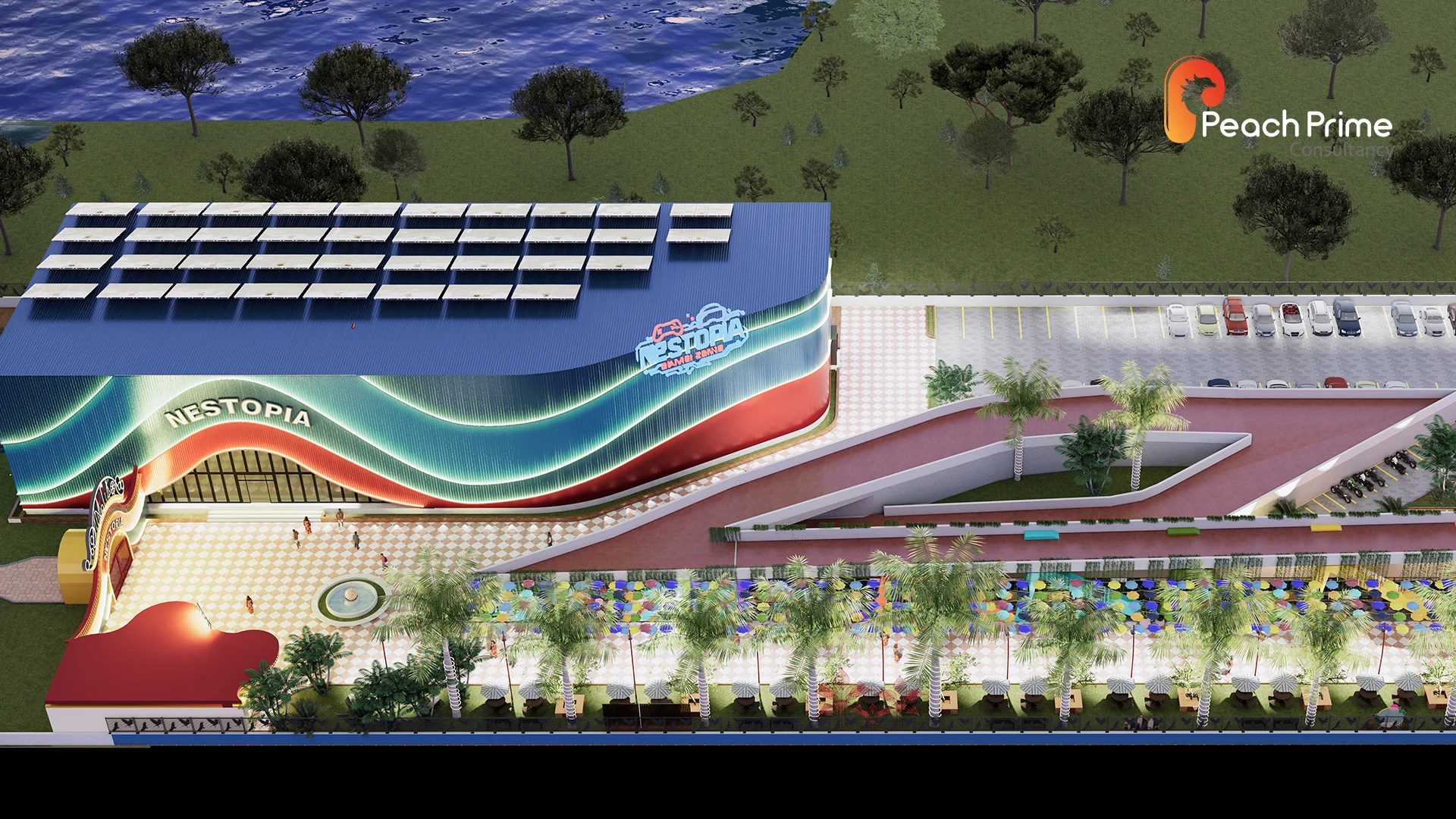
We deliver the master plan as clear 2D plans and 3D visuals that stakeholders can review and approve before construction. The drawings show zoning, ride placement, circulation, infrastructure, and phasing, and they form the document set used to appoint architects, structural engineers, and ride suppliers, so the park that is built matches the plan that was approved.
How Much Land Does an Amusement Park Need?
Land requirements follow the ride mix, the visitor numbers, and the room you want for future phases. The table below gives indicative bands by park type.
Park type | Indicative land or area | Notes |
|---|
Regional or family park | 2 to 5 acres | A focused set of family and kids rides |
Mid size amusement park | 5 to 15 acres | A fuller ride mix with F&B and retail |
Large destination park | 15 to 50 acres and above | Multiple zones, signature coasters, and shows |
Indoor amusement park | 20,000 sq ft and above | Climate controlled, often inside a mall or building |
Common Master Planning Mistakes to Avoid
- No room to grow. A plan with no phasing caps the park before it opens.
- Poor circulation. Bottlenecks and dead ends frustrate visitors and reduce capacity.
- Underbuilt infrastructure. Services that cannot carry the park force expensive retrofits.
- Ignoring back of house. Without service routes, maintenance and logistics intrude on the guest experience.
Why Choose Peach Prime
- Commercial master plans. Every zone and flow is judged on capacity, experience, and return.
- Joined up design. The master plan connects directly to our feasibility, ride, and theming work.
- Built to grow. We plan phasing and infrastructure for the long life of the park.
- Experience across markets. We master plan entertainment destinations for clients in India and worldwide.
Global and Asia Reach
Peach Prime is headquartered in Vadodara, India, and our amusement park master planning work extends across India and into Asia, the Middle East, and other global markets. We support international clients through a blend of remote planning and on site engagement, and we adapt every project to local visitor preferences, climate, regulations, and budgets while holding to the same structured process. Whether the park is planned for an Indian metro, a Tier 2 city, or a development overseas, the method and the rigour stay the same.