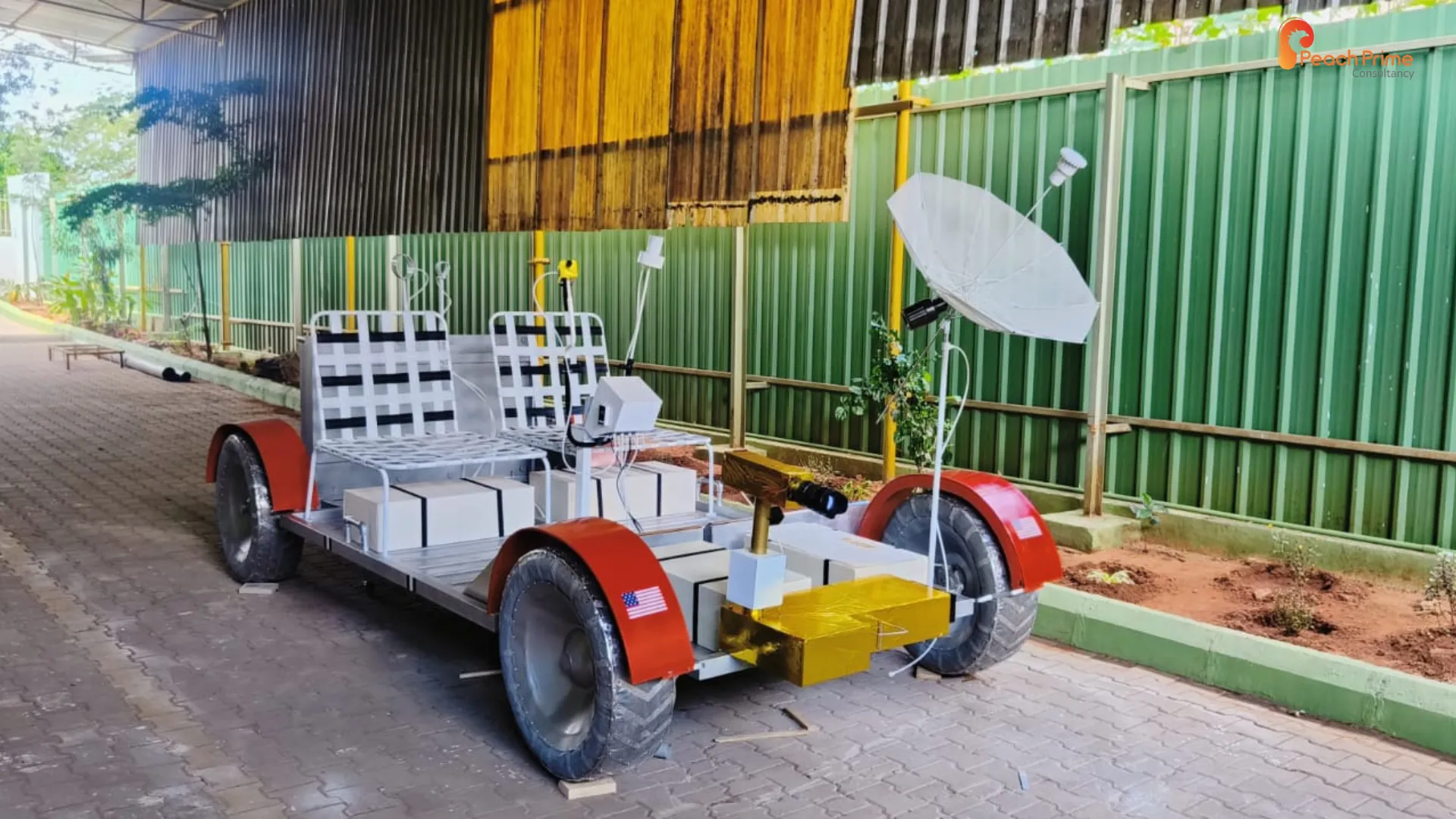
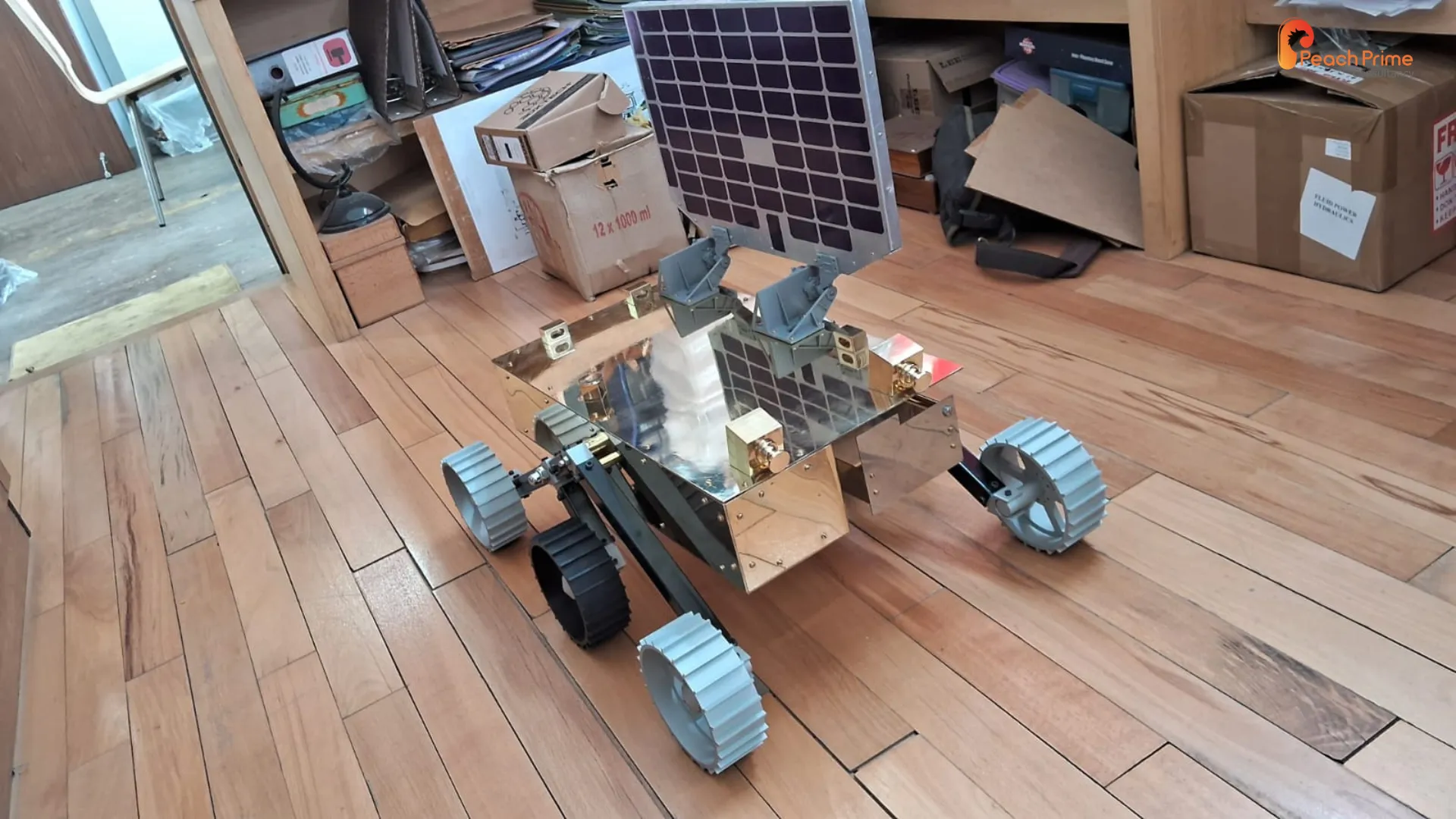
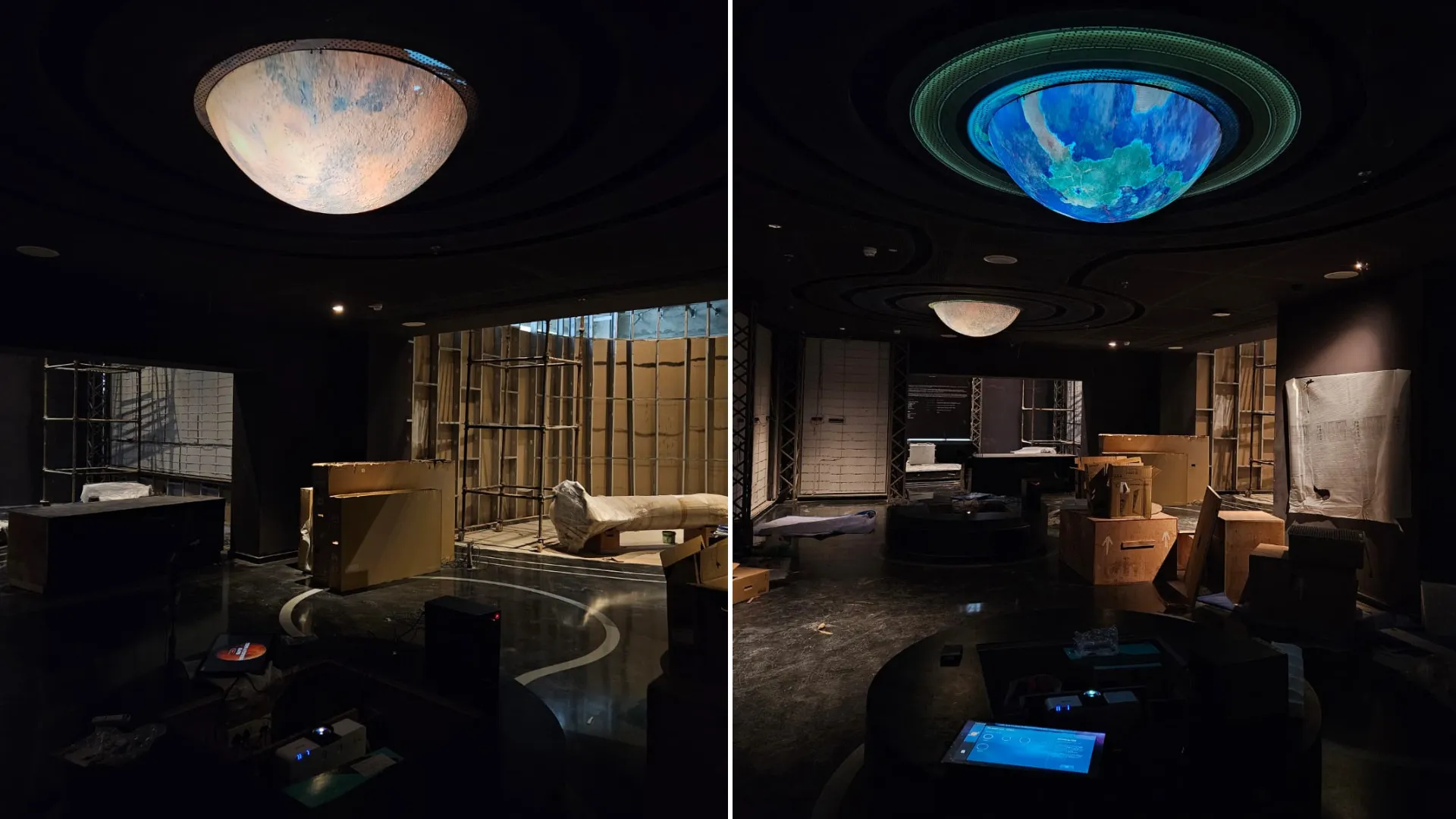
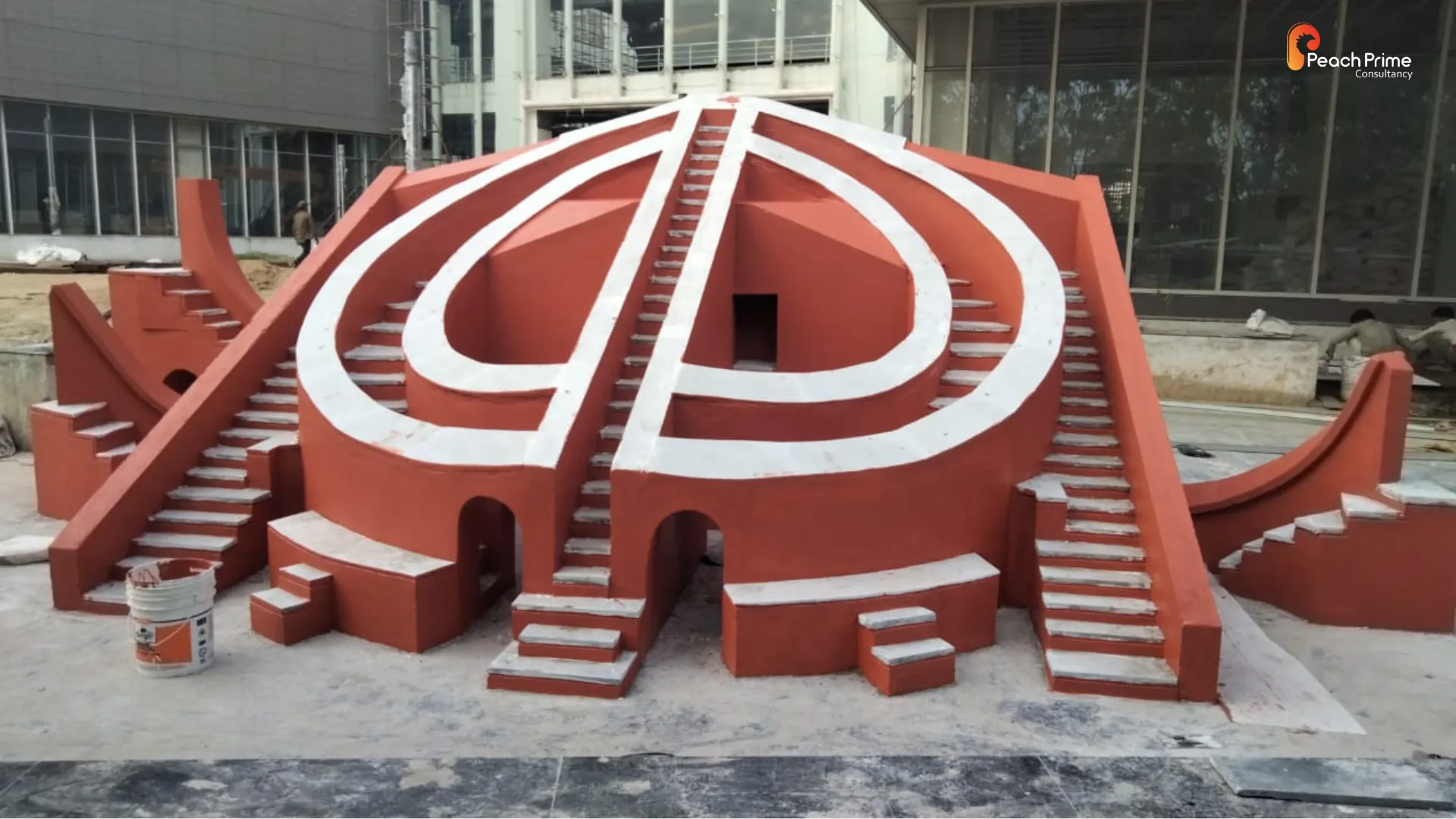
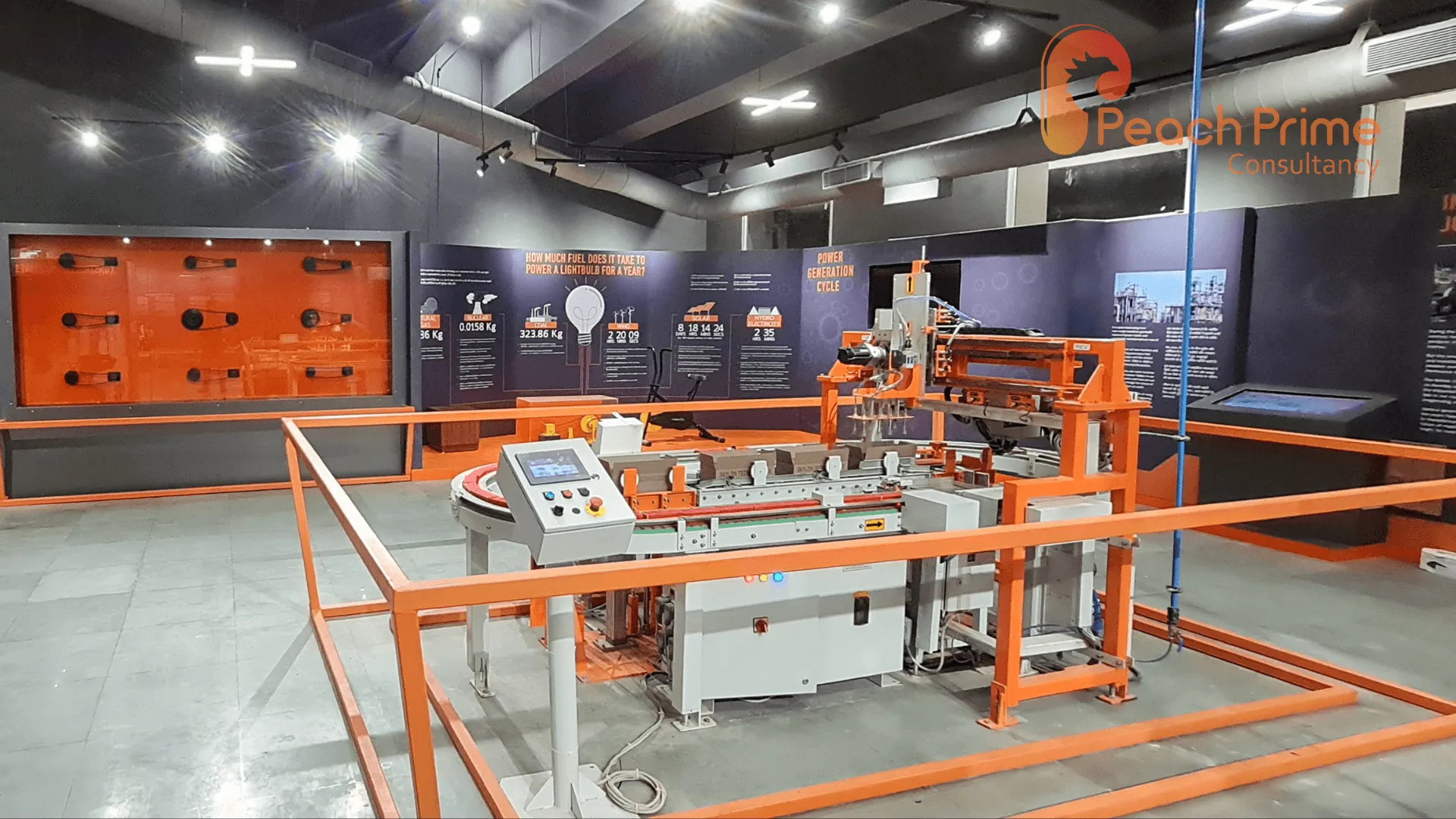
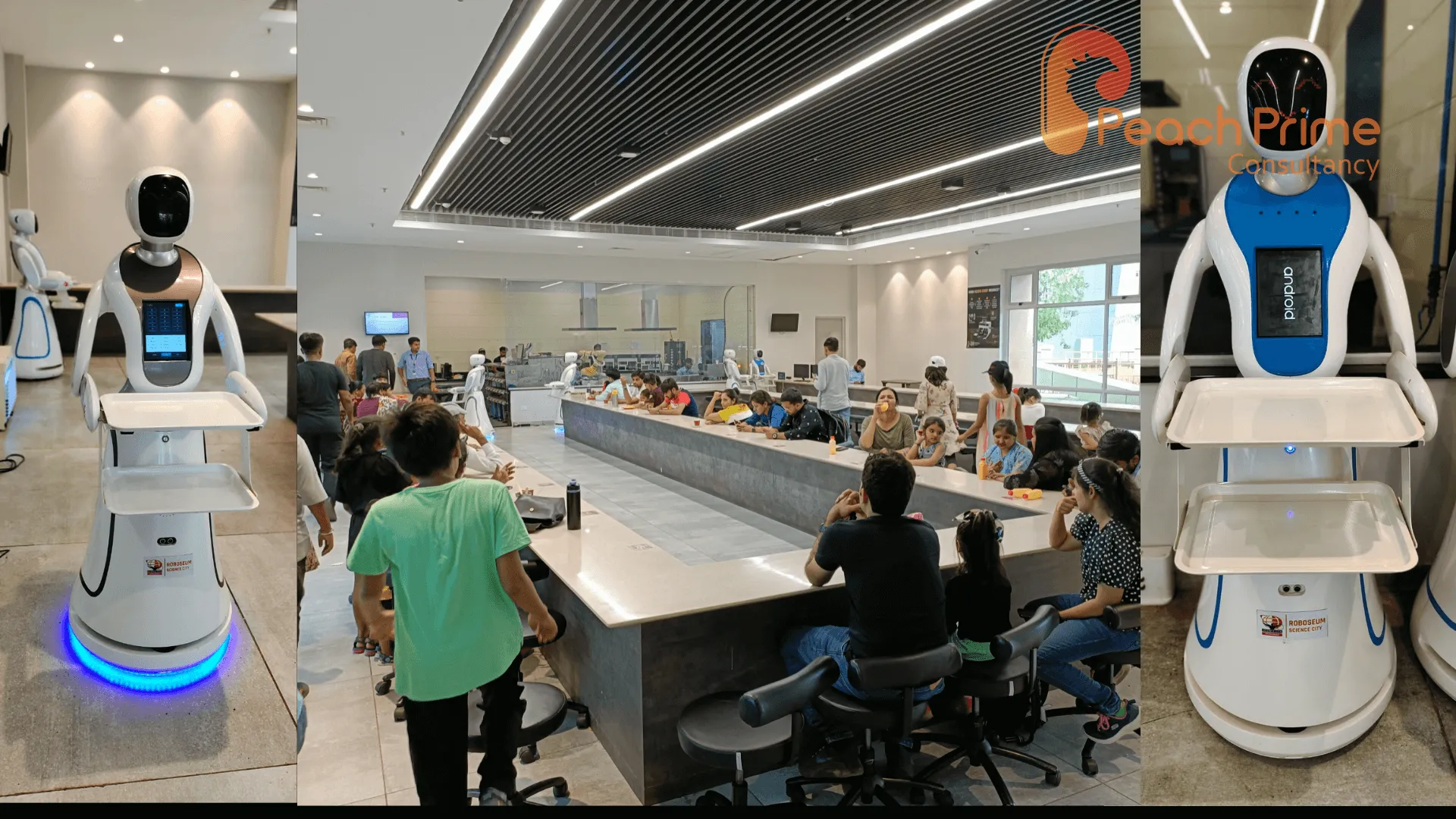
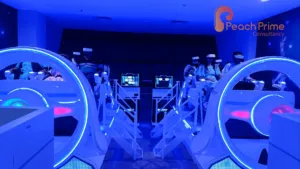
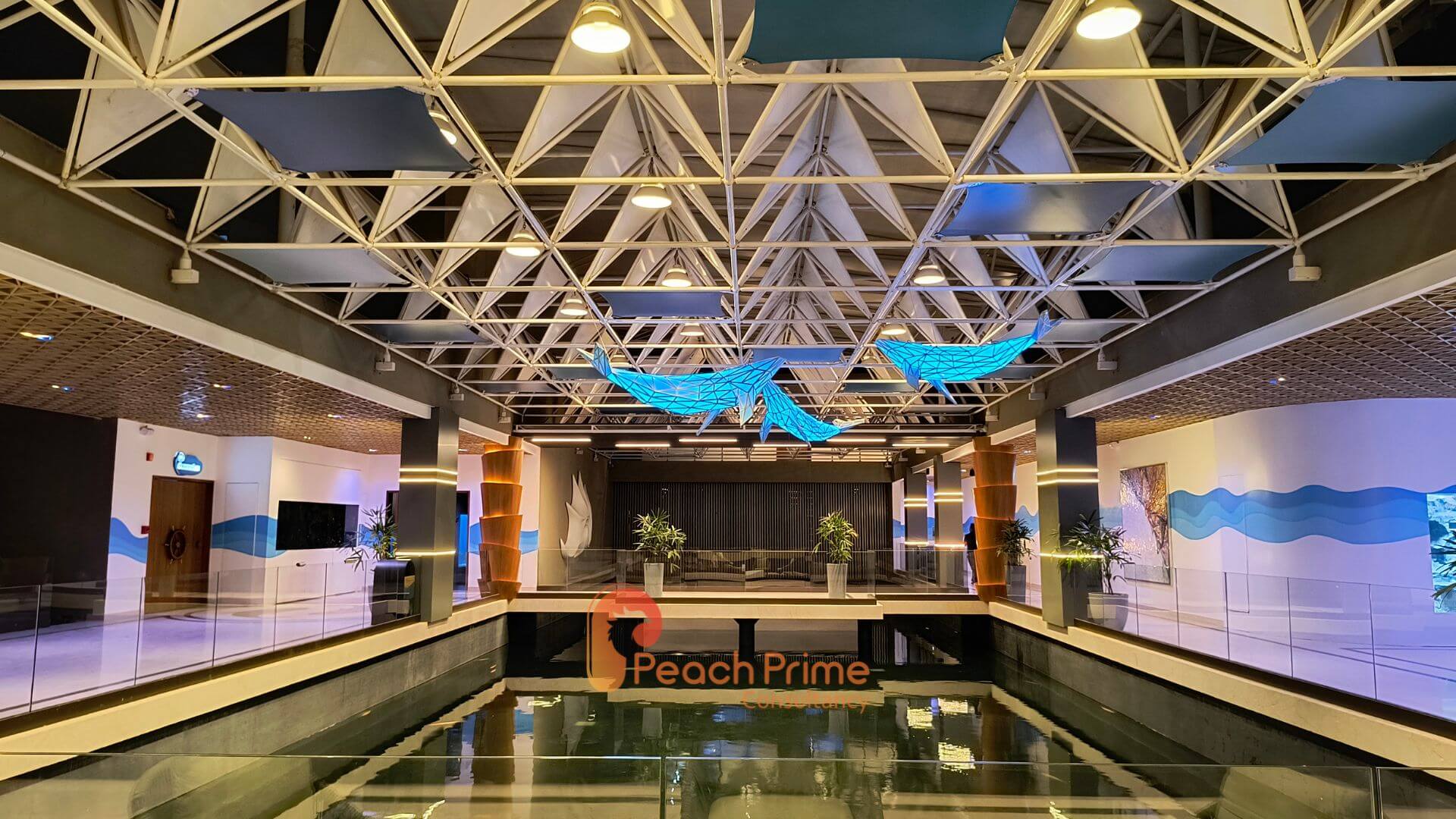
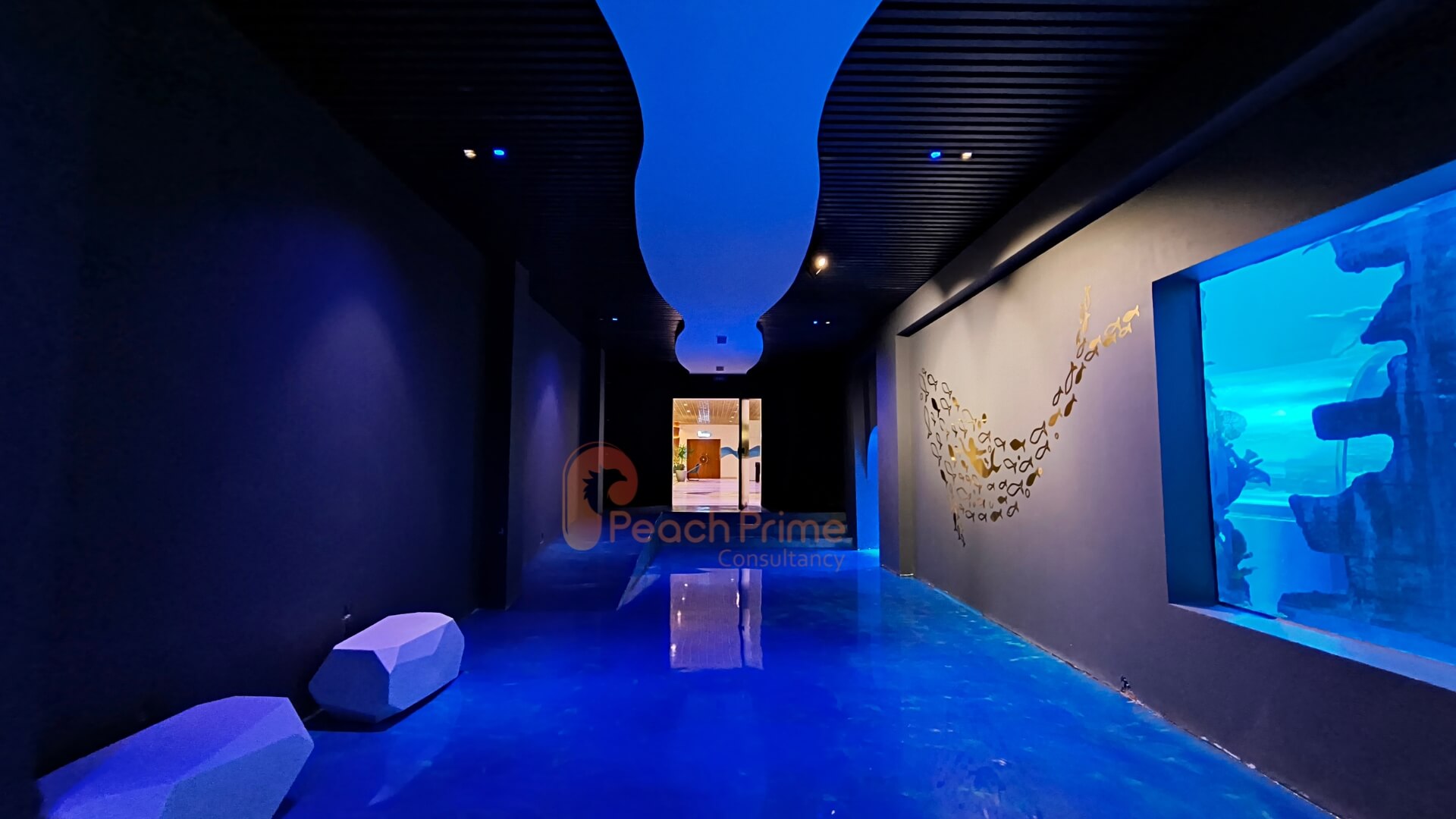
Peach Prime Consultancy is a museum exhibit design company in India providing end-to-end museum design, exhibit planning, and theming services for government bodies, cultural institutions, educational organisations, and private developers. As a museum design consultant working across India, Asia, and global markets worldwide, we design museum environments that engage visitors emotionally, communicate content clearly, and operate sustainably over the long term. Our museum design projects span children’s discovery museums, science and technology galleries, heritage and cultural museums, religious and deity museums, corporate museums, and interactive exhibit installations within larger entertainment destinations.
Museum design at Peach Prime covers every layer of the visitor experience: the spatial layout and visitor flow, the content and narrative strategy of each exhibit, the interactive and digital technologies used to bring content to life, the lighting design that sets atmosphere and directs attention, and the operational systems that allow the museum to run efficiently after opening. We deliver each of these components as an integrated whole rather than as separate contracted services, ensuring the final environment is coherent, purposeful, and visitor ready. Our museum planning and master planning capabilities allow the company to support a museum project from feasibility through to installation.
What Does Museum Design and Exhibit Planning Involve?
Museum design consultancy is the professional service of planning, designing, and specifying a museum or exhibit environment from concept through to construction and installation. It encompasses the physical design of the museum space, the curation and presentation strategy for the exhibits, the selection and integration of interactive and digital technologies, and the planning of visitor flow and experience sequencing. As an experienced museum design consultant in India, Peach Prime brings this full scope under a single accountable team.
A well designed museum is not simply a collection of objects in a room. It is a structured narrative environment in which every spatial decision, every exhibit format, and every piece of technology serves the purpose of communicating specific content to a specific audience in a memorable and engaging way. The spatial sequence a visitor follows, the height at which exhibits are placed, the ratio of passive display to interactive engagement, the use of lighting to direct attention, and the positioning of rest zones within the visitor journey are all deliberate design decisions that directly affect whether visitors leave feeling informed, entertained, and satisfied.
Peach Prime approaches museum design as a discipline that sits at the intersection of storytelling, spatial design, technology integration, and operational planning. We work with content experts, historians, scientists, and cultural authorities to understand what the museum must communicate, and we translate that into a physical and experiential design that makes the content accessible and engaging to the intended visitor audience. This museum exhibit design approach is consistent across every project the company delivers in India and worldwide.
Our Museum Design and Exhibit Planning Services
Peach Prime delivers museum and exhibit design across five integrated service areas. Each can be commissioned as part of a complete museum design engagement or as a standalone service for museums at a specific stage of development. Every service below links to a dedicated page so you can explore the design discipline in detail.
Exhibit Curation | We develop the exhibit content strategy, narrative arc, and curation plan for the museum. This includes defining the thematic structure of each gallery zone, the content hierarchy within each exhibit, the mix of object display, interactive media, and interpretive text, and the sequencing of the visitor journey through the exhibit narrative. Exhibit curation is the content foundation on which all physical and digital design decisions are built. |
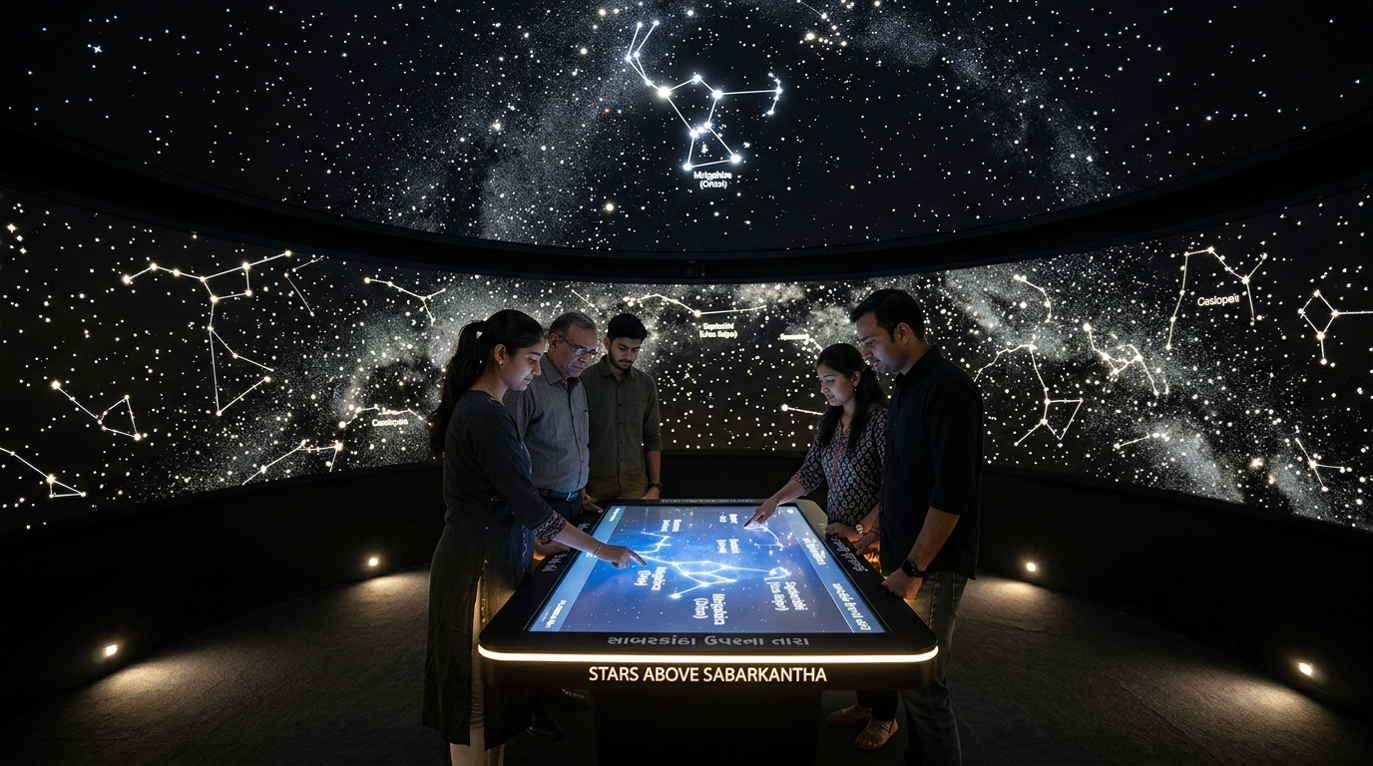
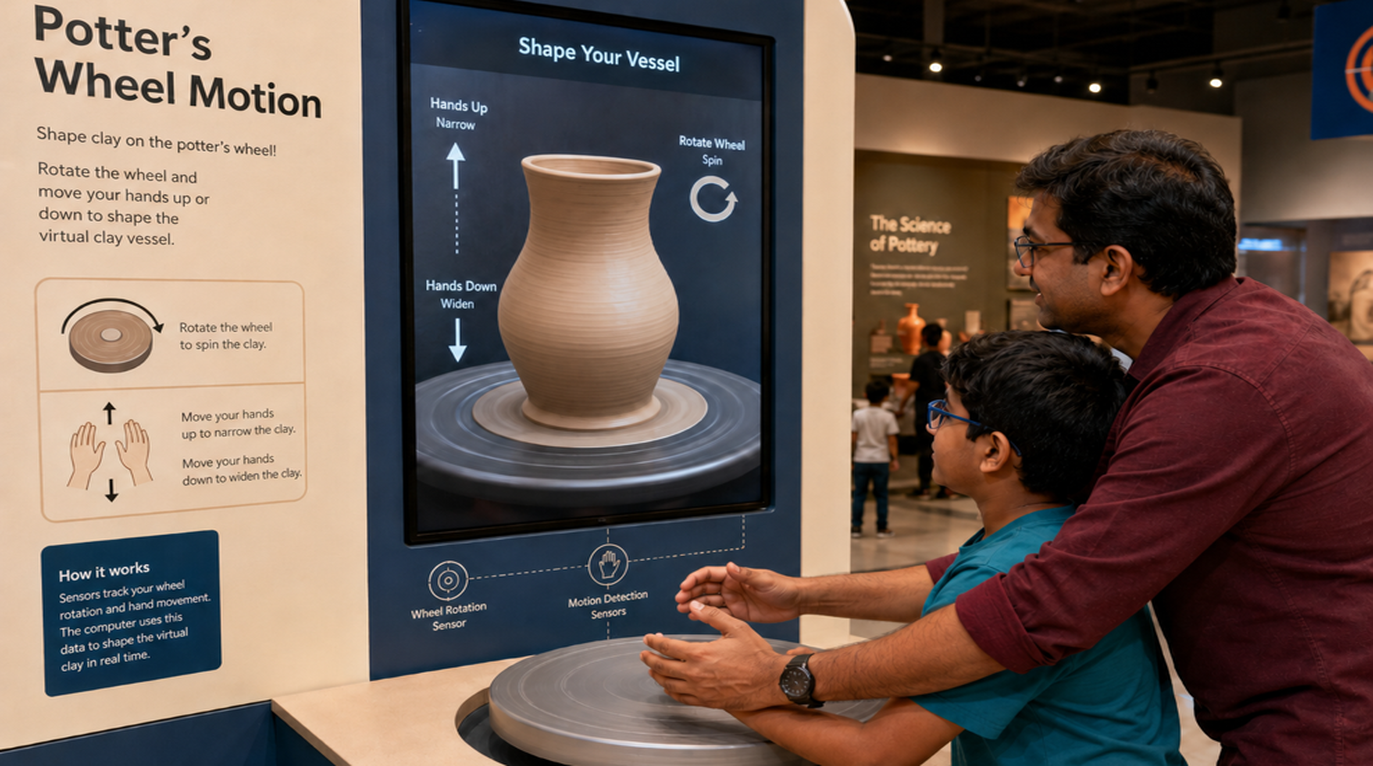
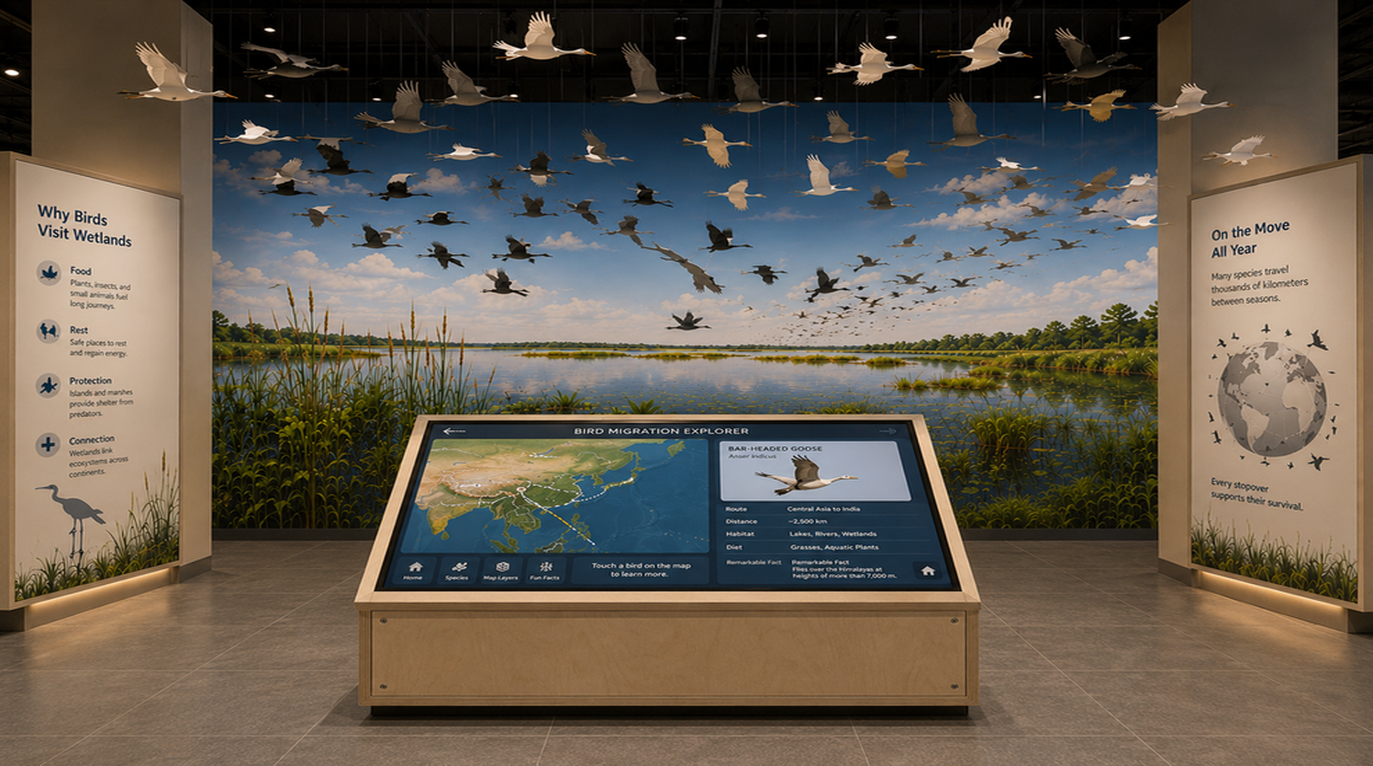
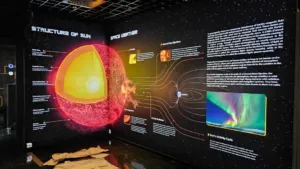
Interactive Experience Design | We design interactive exhibit experiences that allow visitors to engage physically and intellectually with content, rather than passively reading labels or watching screens. Interactive experiences range from touchscreen information kiosks and tactile manipulation exhibits to full room immersive environments using projection mapping, sensor triggered content, and motion responsive installations. We specify and coordinate all interactive technology systems as part of this service. |
Lighting Design for Museums | Lighting in a museum environment serves three distinct purposes: general visitor orientation, object and exhibit highlighting, and atmospheric mood creation. We design integrated lighting schemes that balance these three functions, protecting sensitive objects from UV damage, directing visitor attention to exhibit focal points, and creating the appropriate atmospheric character for each gallery zone. Lighting design is produced in coordination with the exhibit layout and technology integration plan. |
Digital Integration | We plan and specify the digital technology ecosystem of the museum, including audiovisual systems, interactive display hardware, content management platforms, digital wayfinding, audio guide systems, and back of house monitoring and control infrastructure. Digital integration is planned as a unified system architecture rather than a collection of individual vendor solutions, ensuring all systems work together and can be maintained cost effectively after opening. |
Visitor Experience Design | Visitor experience design is the holistic planning of the end to end visitor journey, from arrival and ticketing through gallery sequencing to exit and post visit engagement. We map the visitor journey in detail, identifying the key emotional and cognitive moments the museum intends to create, and ensuring the spatial design, exhibit sequence, interactive touchpoints, food and beverage placement, rest zones, and wayfinding system collectively deliver that journey with consistency and clarity. |
How Peach Prime Designs a Museum or Exhibit Environment
Our museum design process follows six phases, from initial content and audience brief through to installation coordination and pre opening review. Each phase has defined deliverables and client review points, ensuring the design evolves with full client understanding and approval at every stage. This phased museum design methodology is applied consistently for every client of the company, in India and worldwide.
Phase | What We Deliver |
Phase 1: Content and Audience Brief | We begin by developing a thorough understanding of the museum’s content mandate: what it must communicate, to whom, and with what tone and depth. We document the target visitor profile including age range, prior knowledge level, visit motivation, and expected dwell time. This brief governs every subsequent design decision and prevents the common problem of museum environments that are visually impressive but fail to communicate their content effectively to actual visitors. |
Phase 2: Narrative and Exhibit Curation Strategy | We develop the exhibit narrative arc, gallery zone structure, and content allocation plan. This defines the thematic sequence a visitor follows, the content depth of each zone, the balance between different exhibit formats including display, interactive, digital, and hands on, and the placement of anchor exhibit moments that create memorable peak experiences within the visit. |
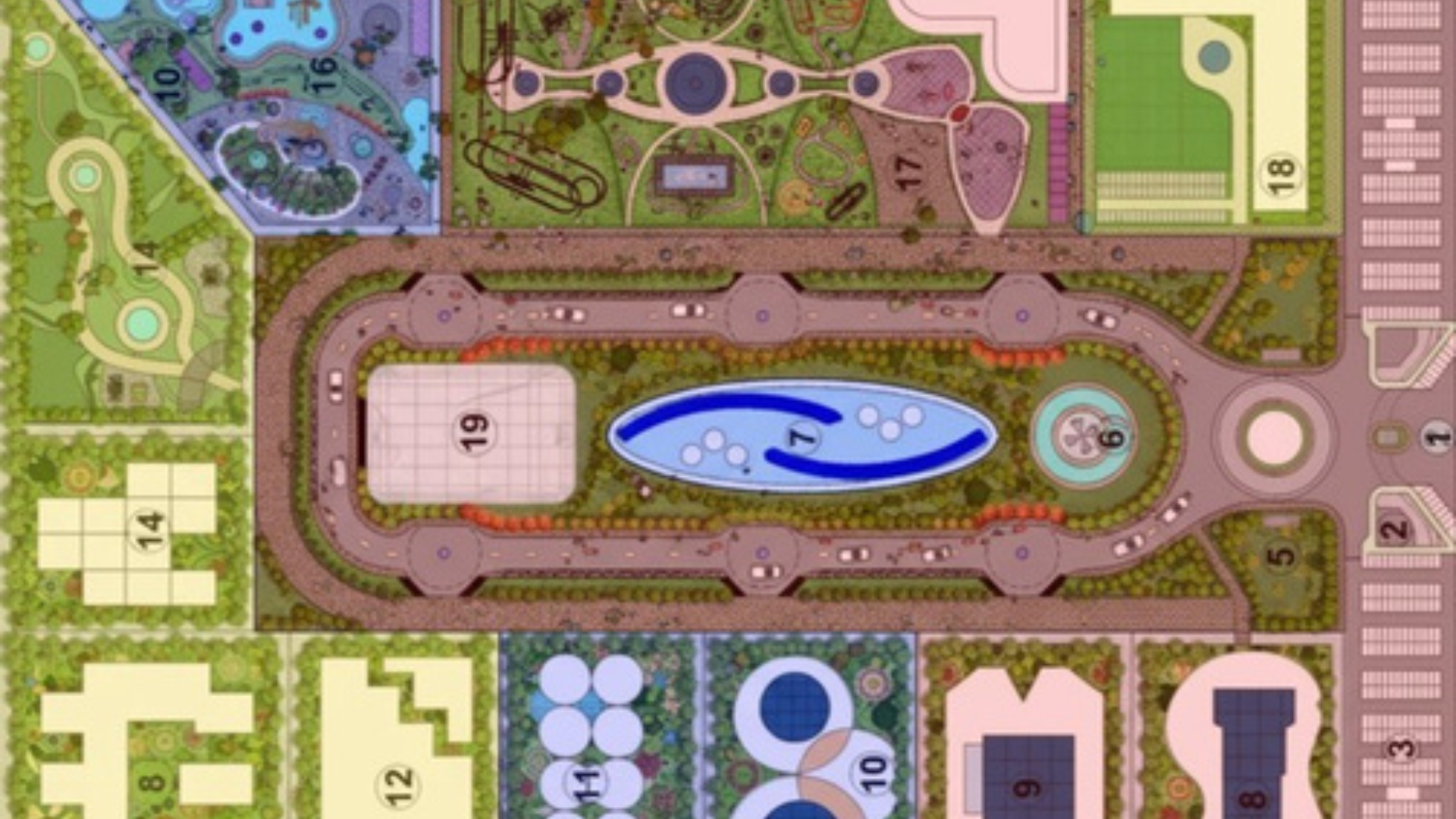
Phase 3: Spatial Design and Visitor Flow | We design the spatial layout of the museum, positioning gallery zones, circulation routes, interactive clusters, rest nodes, food and beverage points, retail, and back of house areas. Visitor flow is modelled to identify and resolve bottleneck points, ensure accessibility compliance, and sequence the visitor experience in the intended narrative order. The spatial design is presented as floor plans, zone layout drawings, and section diagrams. |
Phase 4: Exhibit and Technology Specification | We produce detailed specifications for every exhibit element, interactive installation, audiovisual system, and digital platform in the museum. Specifications include dimensional requirements, technical parameters, content formats, power and data infrastructure requirements, and maintenance access provisions. This document set is used to procure exhibit fabricators, audiovisual contractors, and technology vendors. |
Phase 5: Lighting Design and Atmospheric Planning | We produce the integrated lighting design for the museum, covering general illumination, exhibit accent lighting, architectural feature lighting, and digital display integration. Lighting specifications include fixture selection, lux levels by zone, colour temperature zoning, control system architecture, and UV exposure limits for sensitive objects or materials. |
Phase 6: Installation Coordination and Pre Opening Review | We provide installation coordination support during the fit out phase, reviewing contractor work against design specifications, flagging deviations, and ensuring interactive and digital systems are installed and commissioned correctly. We conduct a pre opening review of the completed museum environment against the approved design and visitor experience brief before the museum opens to the public. |
Types of Museums and Exhibit Environments We Design in India and Worldwide
As a full service museum design company, Peach Prime designs a broad range of museum and exhibit typologies for clients across India, Asia, and global destinations worldwide:
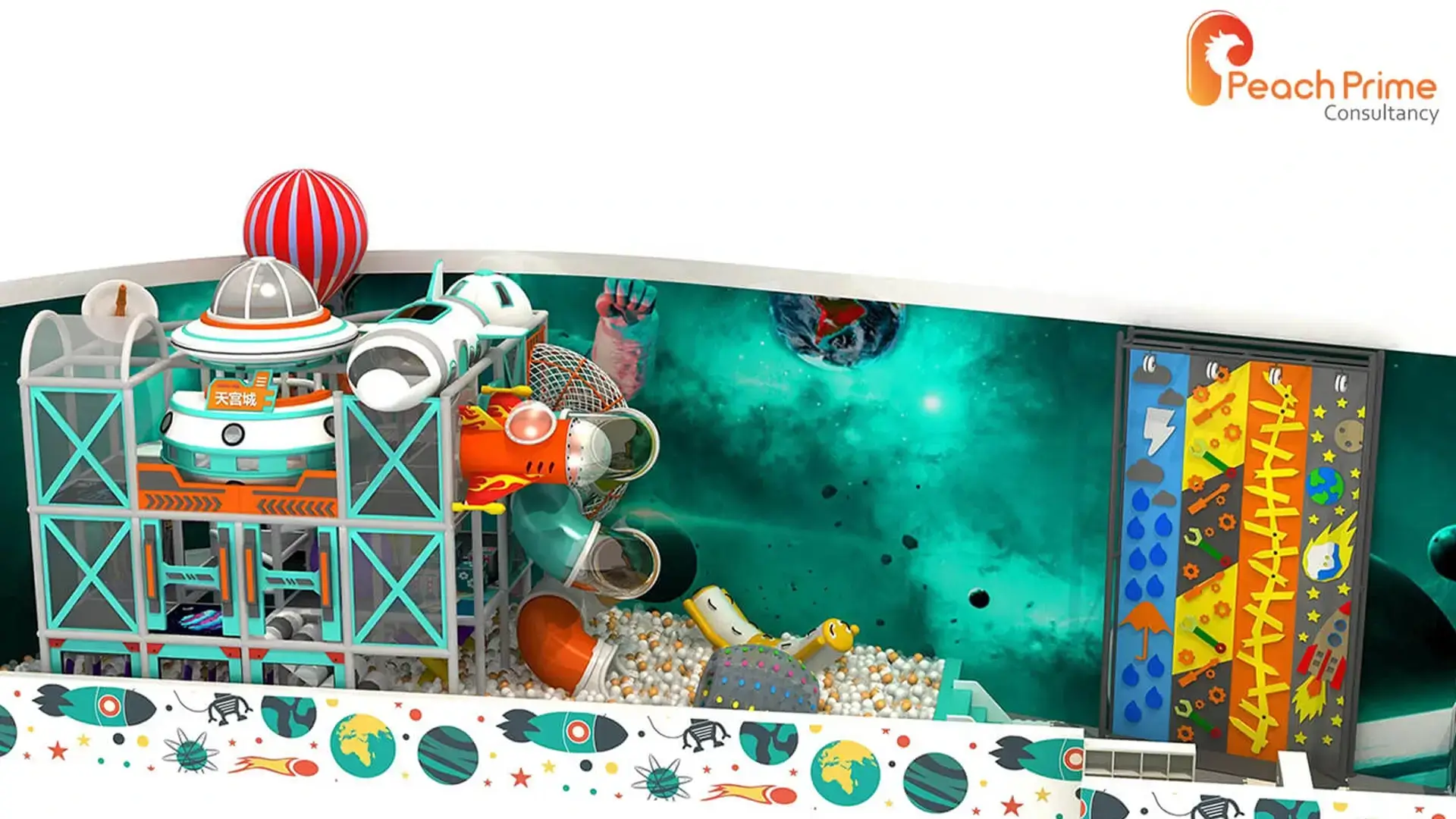
- Children’s discovery museums and interactive science centres for young visitors aged 3 to 14
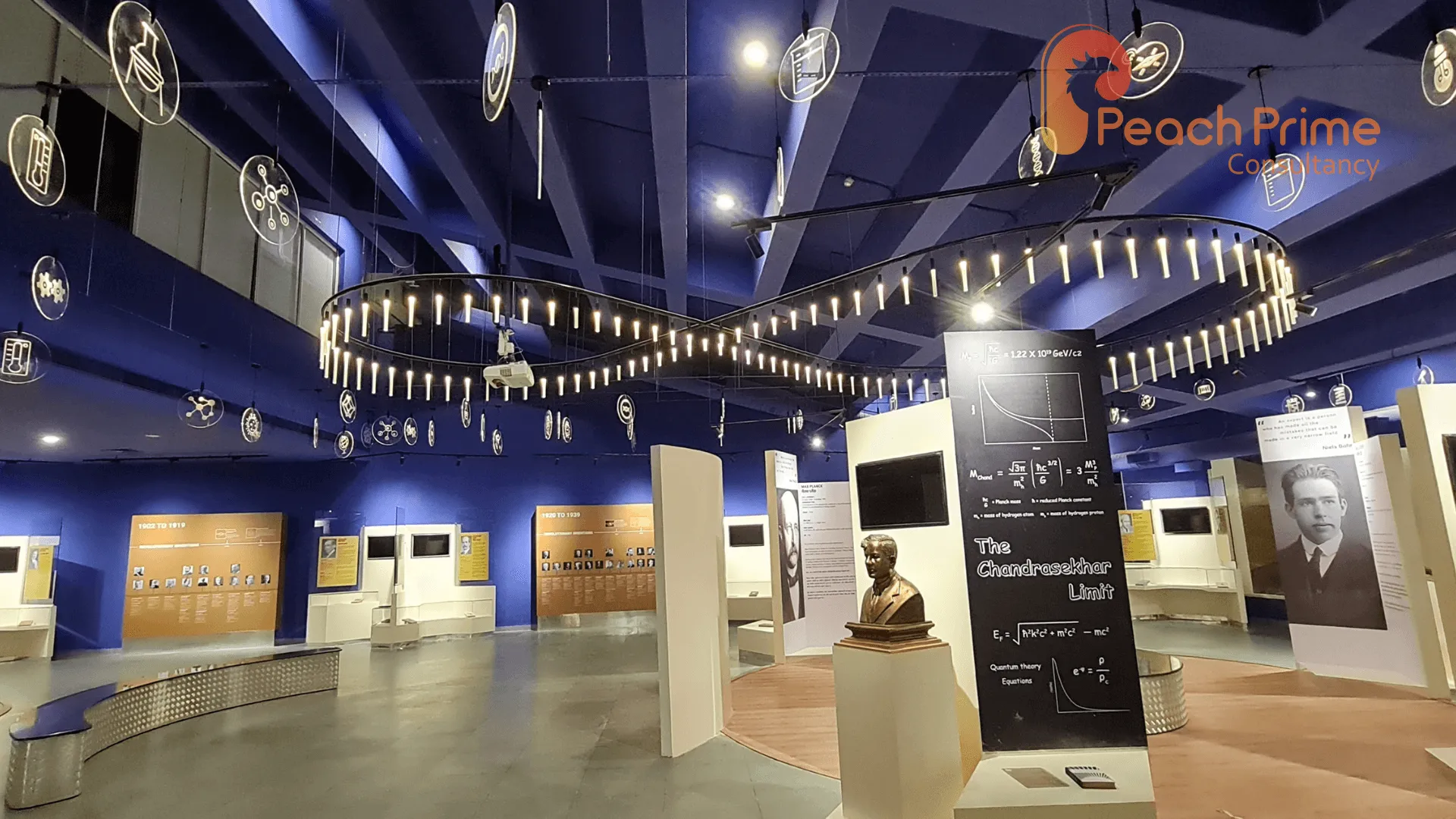
- Science and technology museums featuring hands on experiments, robotics, and STEM focused interactive exhibits
- Heritage and cultural museums interpreting historical sites, civilisations, traditions, and artefacts
- Religious and deity museums presenting spiritual narratives, sacred artefacts, and devotional histories
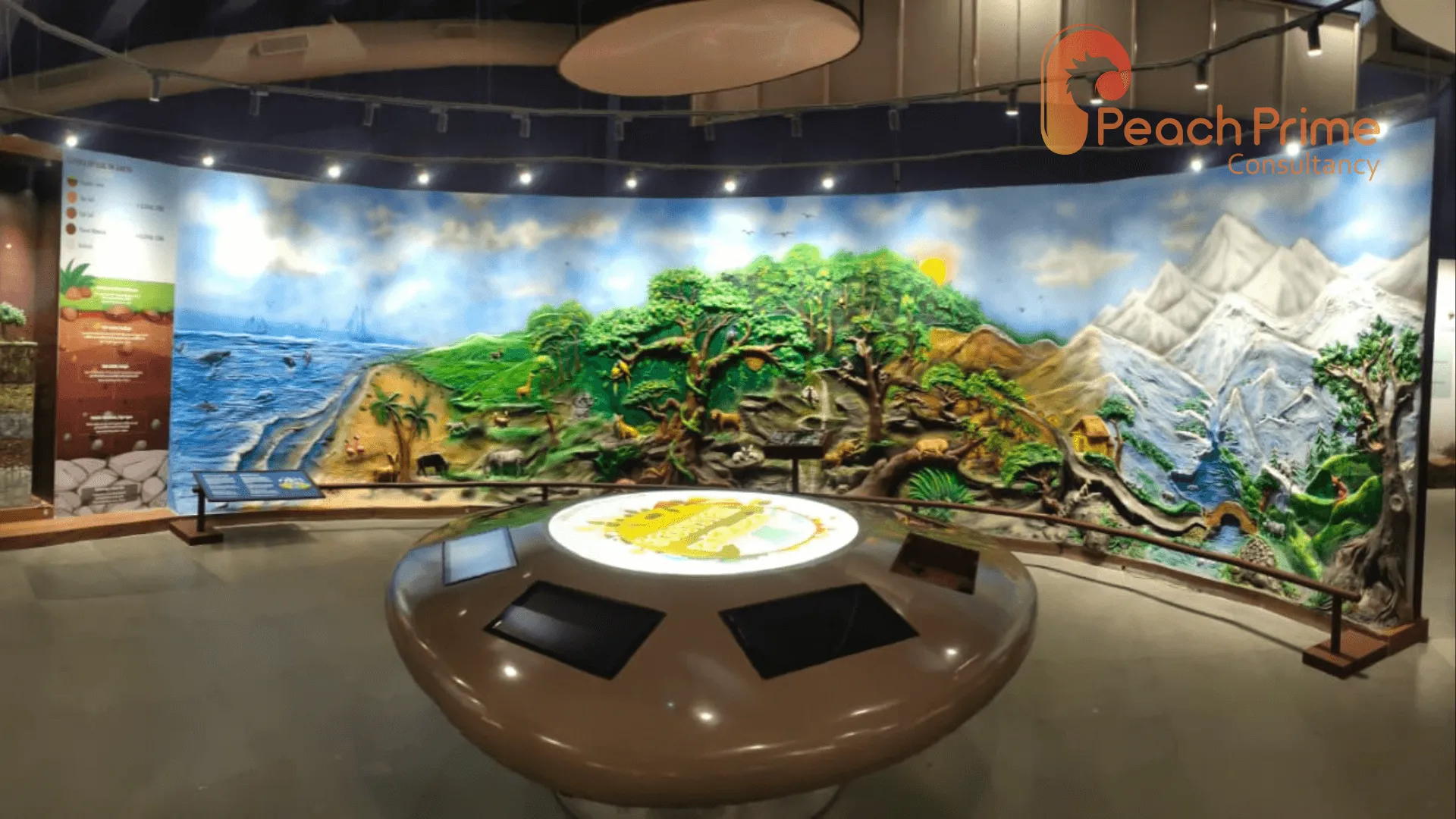
- Natural history and environmental museums covering ecology, biodiversity, and conservation
- Corporate and brand museums for organisations showcasing their history, innovation, and products
- Toy museums and play based exhibit environments combining collection display with interactive play
- Immersive experience museums using projection mapping, augmented reality, and virtual reality to create fully digital exhibit environments
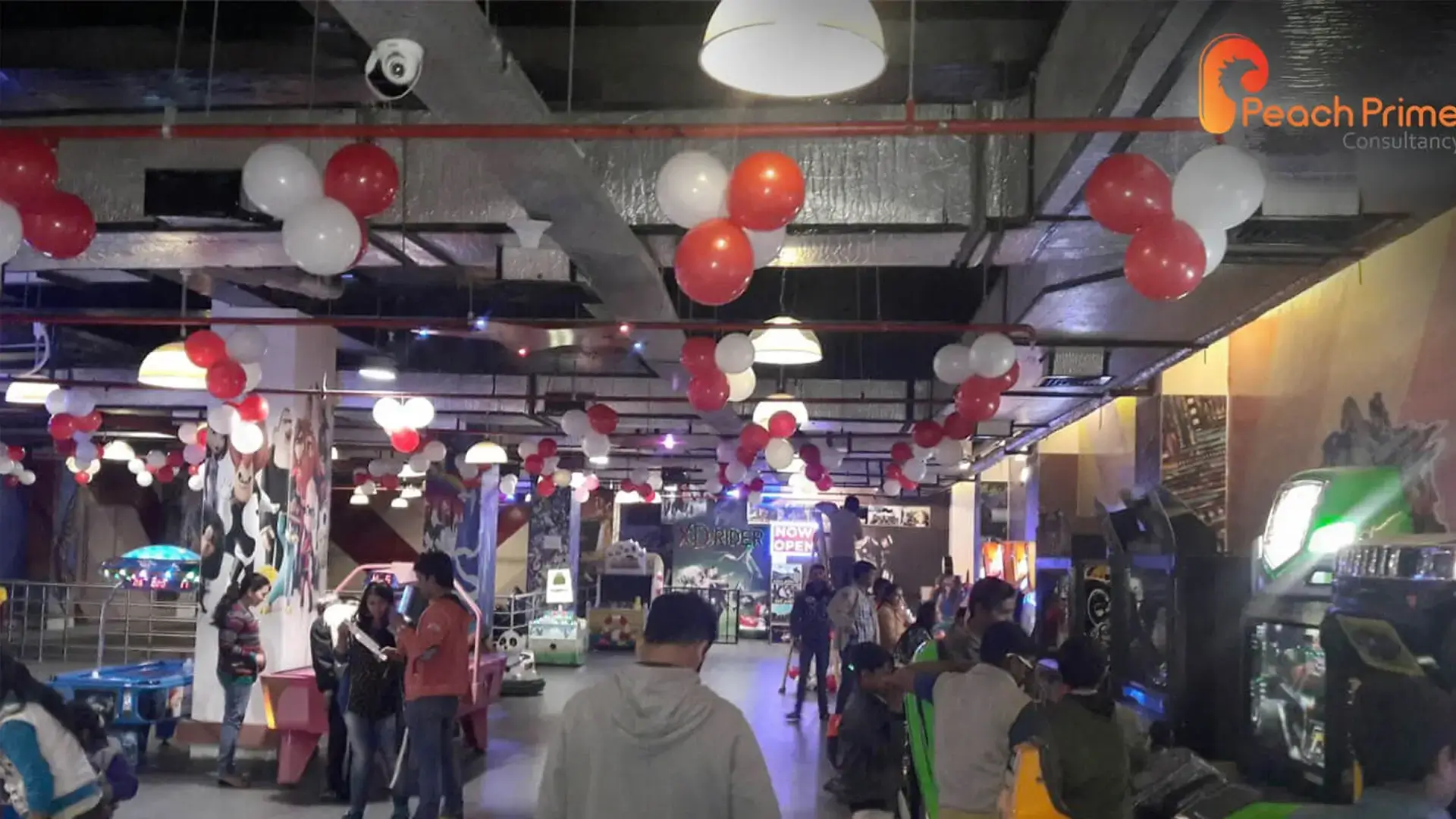
- Exhibit zones within larger entertainment destinations such as theme parks, family entertainment centres, and science parks
Why Choose Peach Prime Consultancy for Museum and Exhibit Design?
Content first design approach: Many museum design firms begin with the physical environment and fit the content around it. Peach Prime begins with the content mandate and visitor audience, and designs the environment to serve them. This museum design approach ensures the finished museum communicates effectively rather than looking impressive but leaving visitors uncertain about what they experienced.
Technology integration without vendor dependency: We specify interactive and digital systems based on what the exhibit content requires and what the operating team can maintain, not based on relationships with technology vendors. Our specifications are technology agnostic and can be procured competitively, preventing the common problem of museums locked into expensive proprietary systems that become unaffordable to maintain.
Operational sustainability built into the design: Museums that are expensive to operate or technically complex to maintain often scale back their interactive and digital components within two to three years of opening, degrading the visitor experience. Peach Prime designs museum environments with operational sustainability as a core requirement, specifying systems and materials that can be maintained by in house staff at a cost the operating model can support.
Executed museum projects across diverse typologies: Peach Prime has designed children’s museums, science galleries, heritage museums, religious and cultural museums, and corporate exhibit environments. This cross typology experience means the company brings proven design approaches from each museum type to every new project in India and worldwide, rather than applying a single design template regardless of content or audience.
A museum design consultant with a global outlook: From a base in India, the company serves cultural institutions, developers, and government clients across Asia and global markets worldwide. You can review our delivered work on the Projects page or contact our team to discuss a new museum or exhibit design brief.
Frequently Asked Questions: Museum Design and Exhibit Planning
Q1. How long does museum design take?
A complete museum design typically takes 2 to 3 months depending on size and complexity – concept and curation take 2–4 months, detailed exhibit design 2–3 months, and fabrication/installation 4–10 months. Small experience museums can open within 8–10 months; large science galleries take longer.
Q2. What is museum master planning?
Museum master planning defines the visitor journey, gallery sequence, narrative structure, space allocation, circulation, and technology infrastructure for the entire museum before individual exhibits are designed – ensuring the museum works as one coherent story rather than disconnected displays.
Q3. What is experiential museum design?
Experiential museum design replaces passive glass-case displays with immersive, participatory environments – visitors walk into recreated worlds, touch and manipulate exhibits, and become part of the story. It is the dominant approach in modern museums because it dramatically increases engagement, dwell time, and repeat visits.
Q4. What is an interactive museum?
An interactive museum is one where exhibits respond to visitor actions – through touchscreens, sensors, projection mapping, AR, gesture control, and hands-on mechanical exhibits. Interactive museums achieve 2–3× longer dwell times than traditional museums and are especially effective for children’s and science museums.
Q5. How much does museum design cost in India?
Museum exhibit design and build in India typically ranges from ₹8,000 to ₹20,000 per sq ft depending on the level of interactivity, technology, and finish quality. A 10,000 sq ft experience museum generally requires ₹7–15 crore including exhibits, AV, and theming.
Q6. What technologies are used in modern museums?
Projection mapping, interactive touchscreens and tables, motion/gesture sensors, augmented reality (AR), virtual reality (VR), holographic displays, RFID-personalized journeys, AI-driven interactive characters, and immersive audio systems.
Q7. How do museums engage children?
Through role-play environments, hands-on STEM exhibits, gamified learning trails, sensory play zones, and interactive challenges with rewards. The most effective children’s museums design for “parallel engagement” – children play while parents learn alongside – which increases family visit duration and repeat membership.
Q8. What are the latest trends in museum design?
Immersive digital art wings (teamLab-style), AI-personalized visitor journeys, walking dark rides for storytelling, experience museums built around single themes (ice cream, chai, illusions), rotating exhibit architecture for repeat visits, and museum-retail hybrids where visitors take home what they create.